

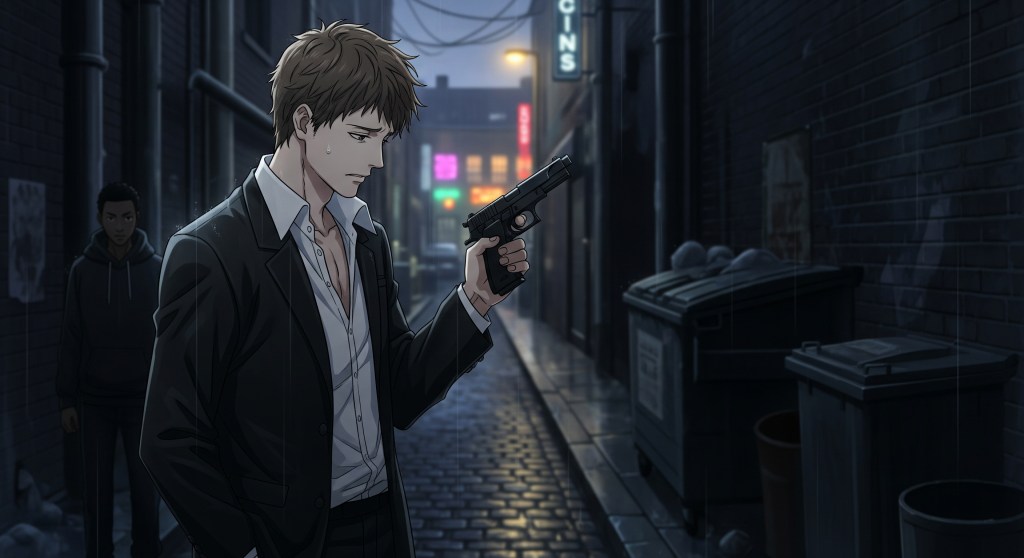
この けんじゅう は ほんもの です か?
kono kenjuu wa honmono desu ka?
Is this pistol real?
Read the explanation below to understand the nuance of how this grammar structure is used.
The nuance is that this ain’t no casual chinwag with your mate down the pub. 〜ですか is proper, it’s polite. You’d use this with a copper, a boss, or someone you don’t know who you’re tryin’ to be respectful to. It’s not somethin’ you’d use with your crew unless you’re takin’ the piss. It’s the kind of language you use when you’re tryin’ to look clean, even if you’re up to your neck in trouble.
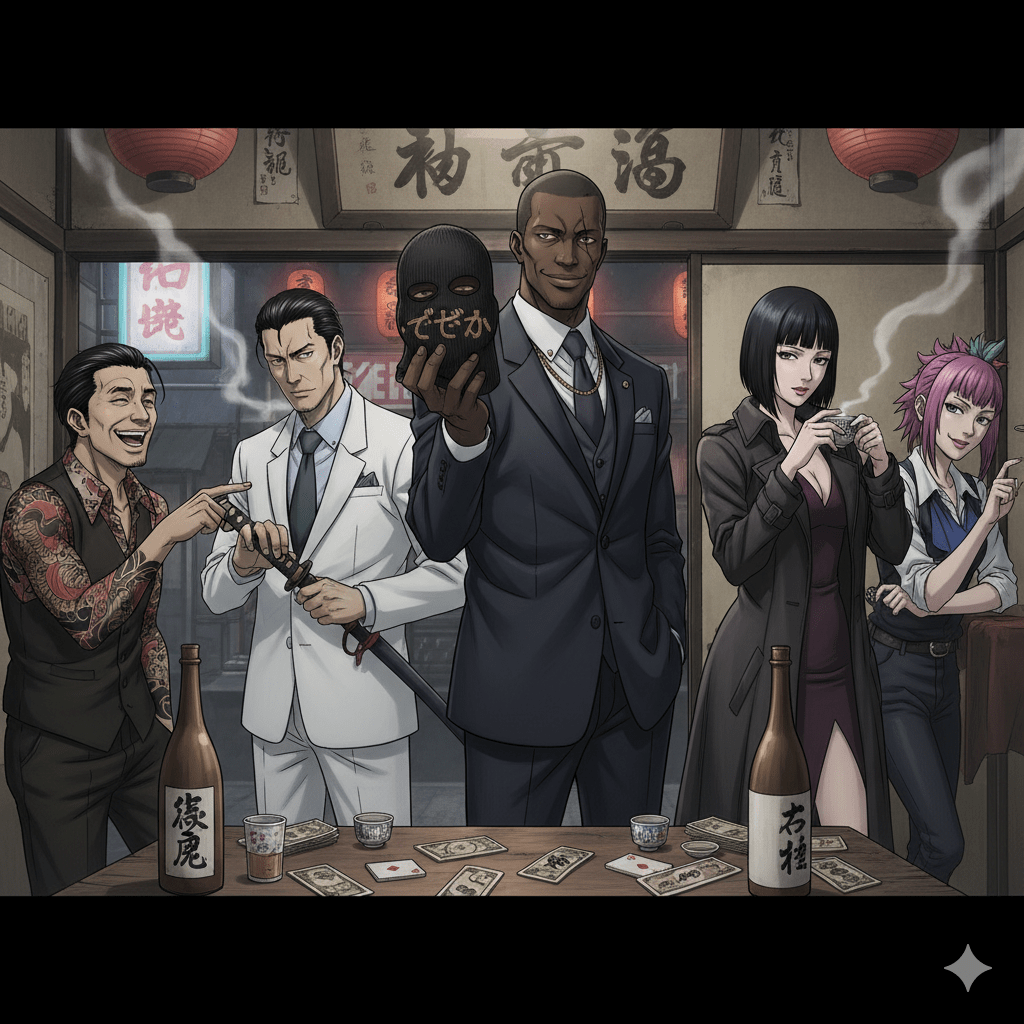
Think of 〜ですか like the balaclava you put on before a job. It hides the rough stuff, makes everything look polite and proper. You wouldn’t go into a bank job without a balaclava, right? Same with a question. You stick ですか on the end to make it respectable. It’s a cover. It makes it all look legit.

Read the table below then use it to conjugate some words you know.
Here is the blueprint on how to build this.
| Word Type | Statement (Fact) | Question (Ask) | English Meaning |
| Noun | これは じゅうです (Kore wa juu desu) | これは じゅうですか (Kore wa juu desu ka) | Is this a gun? |
| i-Adjective | くるまは はやいです (Kuruma wa hayai desu) | くるまは はやいですか (Kuruma wa hayai desu ka) | Is the car fast? |
| na-Adjective | ここは あんぜんです (Koko wa anzen desu) | ここは あんぜんですか (Koko wa anzen desu ka) | Is it safe here? |
Look, this is the easiest hustle you gonna learn. You don’t change nothing in the sentence structure. You don’t move words around like in English (we say “It is” -> “Is it?”). Nah, Japanese is logical. You keep the sentence exactly the same, keeping your stance solid, and you just tack か (ka) onto the end of desu. Boom. Done.
Listen to and repeat the sentences below.
かくし ばしょ は まだ あんぜん ですか?
Kakushi basho wa mada anzen desu ka?
Is the hideout still safe?
この ビール は やすい です か?
kono biiru wa yasui desu ka?
Is this beer cheap?
かれ は こわい ひと です か?
kare wa kowai hito desu ka?
Is he a scary person?
この ばしょ は しずか です か?
kono basho wa shizuka desu ka?
Is this place quiet?
この ひと は きょうはくしゃ です か?
kono hito wa kyouhakusha desu ka?
Is this person a blackmailer?
あなた は さつじん しゃ です か?
anata wa satsujin sha desu ka?
Are you a murderer?
かれら の けいかく は あんぜん ですか?
Karera no keikaku wa anzen desu ka?
Is their plan safe?
あの おんな は われわれ の みかた ですか?
Ano onna wa wareware no mikata desu ka?
Is that woman on our side?
あの おんな の こ は あなた の ともだち です か?
ano onna no ko wa anata no tomodachi desu ka?
Is that girl your friend?
かれ は うらぎりもの です か?
kare wa uragirimono desu ka?
Is he a traitor?
Yo, mad respect. You handled the explanation, the nuance, and the conjugation like a boss. I see you tightening up your flow with that shadowing, too.

But check game—if you really tryna be certified and lock this down? You need to cop that N5 workbook, The Grind.
It’s packing five plays for every point so you can handle your business.
Stay Dangerous

Leave a comment