
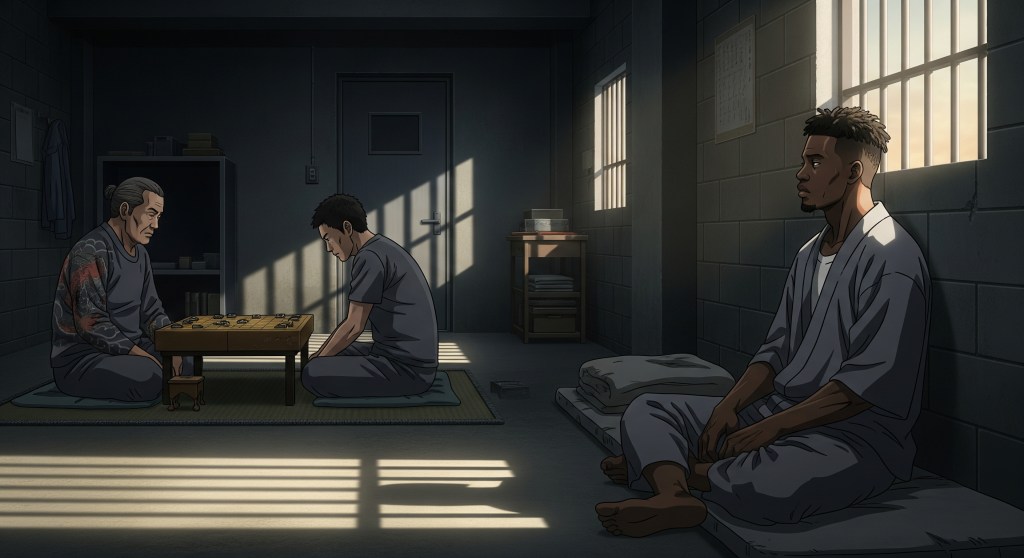
懲役は長いが、独房じゃないだけましだ。
ちょうえき は ながい が、 どくぼう じゃない だけ まし だ。
The prison sentence is long, but at least I’m not in solitary confinement.
This phrase is like a brother telling his homie, “Yeah, you got jumped, and they took your wallet, but at least they didn’t take your new Jordans, right?” It’s all about finding that one little silver lining in a messed-up situation.
It’s got that “it could’ve been worse” vibe. You’re acknowledging the struggle, but you’re also pointing out that it ain’t a total loss. It’s the street-smart way of sayin’ “Count your blessings.”
Here’s how you cook up this grammar. Peep the formula.
| Form Type | Japanese Example | Hiragana | English Translation |
| Verb (Present) | 生きているだけまし | い きているだけまし | At least I’m alive. |
| Verb (Past Neg.) | 盗まれなかっただけまし | ぬすまれなかっただけまし | At least it wasn’t stolen. |
| Noun + である | 味方であるだけまし | みかたであるだけまし | At least he’s an ally. |
| i-Adjective | 安いだけまし | やすいだけまし | At least it’s cheap. |
| na-Adjective | 静かだけまし | しずかだけまし | At least it’s quiet. |
So here’s the deal. You take your verb, your adjective, whatever, and you keep it in its plain form – past tense, negative, present, it don’t matter. Just slap だけまし right on the end. For nouns and na-adjectives, you might need to throw in a だ, で, or である in there, like Noun/Na-adjective + だけまし. It’s flexible, you feel me? It hooks onto the part of the sentence that’s the “silver lining.” Easy money.
Think of it like this: you just pulled a heist, right? But the whole thing went sideways. The cops are on your tail, you dropped half the loot, and your partner got pinched. It’s a bad scene, no doubt. But then you look at your ride – it’s beat up, smokin’, but the engine is still runnin’. You turn to your crew in the back and say, “Man, this whole thing’s a bust, but at least the car still works.”
That’s 〜だけまし. The situation is a wreck, but you’re clinging to that one positive thing – the running car – that makes it better than a complete failure. You ain’t celebrating, but you’re acknowledging the one thing that’s keepin’ you from gettin’ busted right then and there. It’s the “at least” in a world of “oh, hell nah.”
Check out the fresh vocabulary we’re droppin’ in this lesson.
怪我する (けがする)
English: To get injured; to get hurt.
“Kegasuru” is what goes down when things get heated and somebody catches a fade. It ain’t just a paper cut, ya feel me? We talkin’ ’bout takin’ a real hit, maybe from a scrap, a hustle gone wrong, or just bein’ in the wrong place at the wrong time. If you ain’t careful on these streets, you’re gonna kegasuru, and then you’re outta the game for a minute, maybe for good. It’s that real-deal physical damage.
利き腕 (ききうで)
English: Dominant arm; strong hand.
Your 利き腕, that’s your money hand, your go-to. It’s the arm you put in the work with, the one that gets the job done. When you step to a fool, this is the hand that does the talkin’, you dig? It’s your power piece, your main tool. Think of your most trusted homie, the one you call when things get heavy – that’s your right-hand man, and this is your right-hand arm. It’s what you build your whole game around. Don’t get it twisted, it’s not just for throwin’ hands; it’s how you control your world. Word.
食い物 (くいもの)
English: Food; grub; eats.
“Kuimono” is what keeps the whole crew fed. It’s the chow, the grub, the eats you put on the table after a long day’s grind. Ain’t nobody makin’ moves on an empty stomach, you hear me? Whether it’s a feast to celebrate a big score or just some takeout from a spot in the hood, kuimono is essential. It’s about more than just eatin’; it’s about breakin’ bread with your people, re-fuelin’ for the next hustle.
餓死する (がしする)
English: To starve to death.
Now this one’s heavy, straight up. “Gashisuru” is the absolute worst-case scenario. This is when the hustle dries up completely, and there’s no kuimono in sight. We ain’t talkin’ ’bout missin’ a meal; we talkin’ ’bout wastin’ away to nothin’ ’cause you can’t get a damn thing to eat. It’s the ultimate sign of hittin’ rock bottom, a real tragedy in the concrete jungle. It’s what every hustler is fightin’ to avoid, every single day.
拳銃 (けんじゅう)
English: Handgun; pistol; piece.
Yo, “kenjuu” is the heater, the strap, the piece. It’s that tool you keep tucked away for protection or when you gotta make a point, loud and clear. This ain’t no toy; it’s the equalizer on the streets. When words ain’t enough and respect is on the line, the kenjuu does the talkin’. It’s a heavy thing to carry, ’cause once you pull it, ain’t no goin’ back. It changes the whole game, for real.
Here are some lines you might hear in the back alleys of Shinjuku.
計画は失敗したけど、誰も怪我しなかっただけましだ。
けいかくはしっぱいしたけど、だれもけがしなかっただけましだ。
The plan failed, but at least nobody got hurt.
シャバに戻れただけましだろ?またやり直せるぜ。
しゃばにもどれただけましだろ?またやりなおせるぜ。
At least you’re out of prison right? You can start over.
銃撃戦で腕を撃たれたが、利き腕じゃないだけましだった。
じゅうげきせん で うで を うたれた が、 ききうで じゃない だけ まし だった。
juugekisen de ude o utareta ga, kikiude janai dake mashi datta.
I got shot in the arm during the shootout, but at least it wasn’t my dominant arm.
借金は増えたが、まだ住む家があるだけましだ。
しゃっきんはふえたが、まだすむいえがあるだけましだ。
My debt grew, but at least I still have a place to live.
俺のシマを半分取られた。逮捕されなかっただけましか。
おれのしまをはんぶんとられた。たいほされなかっただけましか。
They took half of my territory. At least I didn’t get arrested, I guess.
あいつは裏切ったけど、命までは取られなかっただけましだ。
あいつはうらぎったけど、いのちまではとられなかっただけましだ。
He betrayed us, but at least our lives weren’t taken.
食い物は刑務所のメシだけど、餓死しないだけましだ。
くいものかけいむしょのめしだけど、がししないだけましだ。
The food is prison chow, but at least I won’t starve to death.
彼女は去ったが、子供と会えるだけましだ。
かのじょはさったが、こどもとあえるだけましだ。
She left me, but at least I can still see my kids.
拳銃は手に入らなかったけど、ナイフがあるだけましだ。
けんじゅうはてにはいらなかったけど、ナイフがあるだけましだ。
I couldn’t get a gun, but at least I have a knife.
車はボロボロだが、走れるだけましだ。
くるまはぼろぼろだが、はしれるだけましだ。
The car is a wreck, but at least it still runs.
Stay sharp, keep your head up, and remember to always find that glimmer of hope, no matter how deep you’re in the trenches.
Peace out.

Leave a comment