

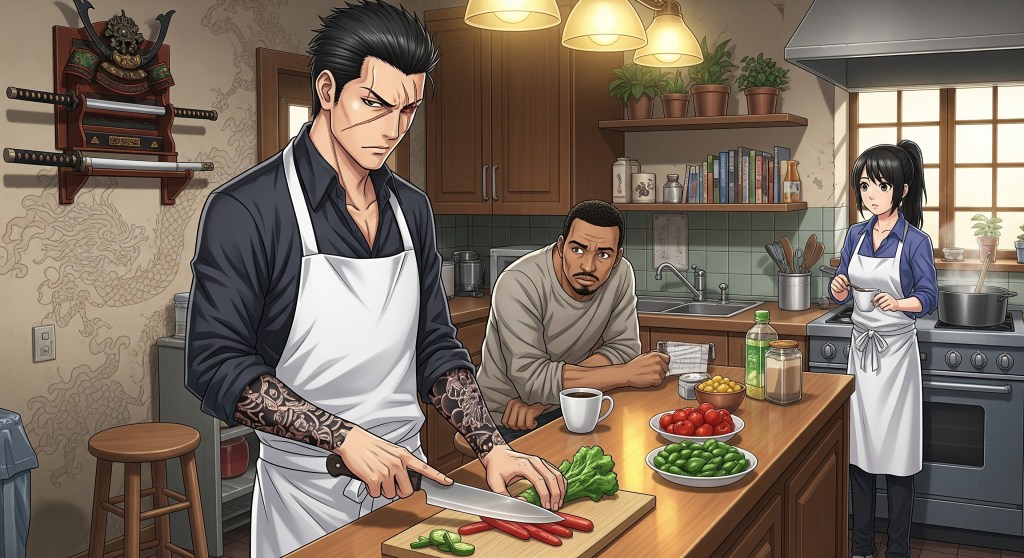
俺
がヒットマンを引退
してこのかた、料理
しかしてない。Ever since I retired as a hitman, all I’ve been doing is cooking.
This phrase, 〜てこのかた, is all about marking a point in time, a specific event, and everything that has happened since that event. It’s like, “ever since this thing went down, a whole new game has been set.” It implies that the event was a major turning point, and things have been straight-up different from that moment on. The state of things has been continuous and hasn’t changed. It’s got a real strong feel to it, a serious, “no turning back” kinda vibe. You use it for big stuff, not some little trip to the corner store. Think of it as marking the beginning of a whole new chapter in your life, or in the whole hood’s history. It’s often used with words like 以来 (irai) which means “since then,” but 〜てこのかた is way more dramatic, more like a grand proclamation.

Aight, here’s the lowdown on how to get this grammar on lock.
| Conjugation | Example Sentence |
| 動詞 (Verb) Te-form + このかた | 組 に入 ってこのかた、毎日 がホリデーだぜ。 Ever since I joined the gang, every day’s been a holiday. |
This pattern is a piece of cake. All you gotta do is take the te-form of a verb and slap このかた (kono kata) right after it. Simple as that. The verb is the main event, the one that kicks off the whole shebang. For example, if you want to say “ever since I moved to the city,” you’d use the te-form of the verb 引っ越す (hikkosu), which is 引っ越して (hikkoshite), and then add このかた. So it becomes 引っ越してこのかた. Easy money.
Key Points to Remember:
Stiff and Serious: 〜てこのかた has the same meaning as 〜以来 (irai), but it’s way more formal and stiff. You won’t hear this on the block every day; it’s for when you’re layin’ down the law or talkin’ ’bout some serious history.
Strictly the Past: This grammar is only used to talk about things that happened in the past, leading up to the present. You can’t use it for the future, so don’t try to get clever with it.
No Recent Events: This ain’t for talkin’ ’bout what happened last night. This is for major events that went down a while ago. Think big, not small.
Picture this: You just pulled off the biggest heist of your life. The loot is secure, the cops are clueless, and you’re sittin’ pretty. From that moment on, your life is different. You’re a baller now, a shot caller. That pivotal moment, that’s what 〜てこのかた is all about. It marks a specific event in the past, and everything that has happened since then is a direct result of it. It’s a heavy-hitter, used for events that completely flip the script on your life. We ain’t talkin’ ’bout a bad haircut; we’re talkin’ ’bout a new life, a new beginning. It’s like tellin’ somebody, “Ever since I caught that body, I ain’t been the same.”

Aight, let’s get you hip to some of the words we just dropped.
仕切る (しきる)
English: To manage; to control; to run the show.
When you 仕切る, you’re the one callin’ the shots, feel me? It’s like you’re the main man in charge, runnin’ the whole operation. In this game, you gotta have somebody 仕切る the crew, the territory, the whole shebang. If you ain’t 仕切る it, someone else will, and they ain’t gonna be doin’ you no favors. It’s all about bein’ the boss and makin’ sure everything runs smooth.
後悔する (こうかい する)
English: To regret; to be remorseful.
後悔する is when you look back at somethin’ you did, or somethin’ you ain’t do, and you wish you could take it back. Like, you made a bad move, or you trusted the wrong cat, and now you sittin’ here thinkin’, “Man, I shoulda known better.” In this life, you can’t be livin’ with 後悔する, you gotta learn from your mistakes and keep it movin’.
ボロボロ (ぼろぼろ)
English: Tattered; worn out; ragged.
When somethin’ is ボロボロ, it’s beat up, busted up, and ain’t worth a damn. Could be your kicks, your ride, or even your whole life, know what I’m sayin’? If you ain’t careful, the streets will leave you ボロボロ. It’s that state of bein’ all broken down, like you been through the wringer and got nothin’ left.
鉄砲玉 (てっぽうだま)
English: A “bullet”; a hitman; a go-getter who does the dirty work.
A 鉄砲玉 is a cat who rolls deep, no questions asked. They the one sent to handle the grimy business, the one you sick on your enemy. They ain’t got no fear, just a mission. They the trigger man, the one who pulls up and gets the job done, no matter what. They live fast and they die hard, you dig?
前科 (ぜんか)
English: A criminal record; a prior conviction.
前科 is your history, your rap sheet, all the times you got caught up and did some time. It’s the paper trail that follows you, lettin’ everyone know you been in the system. Once you got 前科, it’s a whole different ballgame. It can be hard to get a real job, to get back on your feet. That 前科 is always on your back, remindin’ you and everyone else of your past.
Here are some real-talk examples of how we use this grammar.
ボスに裏切
られてこのかた、誰
も信用
してねえ。
Ever since I was betrayed by my boss, I haven’t trusted anyone.
シャバに出
てきてこのかた、真
っ当
な仕事
はしてねえ。
Ever since I got out of the joint, I haven’t done any legit work.
組織
に入
ってこのかた、家族
とは連絡
を取
っていない。
Ever since I joined the organization, I haven’t been in contact with my family.
前科
がついてこのかた、まともな人生
は諦
めた。
Ever since I got a criminal record, I’ve given up on a decent life.
あの女
に出会
ってこのかた、俺
の運命
は狂
い始
めた。
Ever since I met that woman, my fate began to go crazy.
鉄砲玉
を食
らってこのかた、俺
の体
はボロボロだ。
Ever since I took a bullet, my body has been a wreck.
親父
を裏切
ってこのかた、ずっと後悔
している。
Ever since I betrayed the old man, I’ve been regretting it.
街
を仕切
ってこのかた、誰
も俺
に逆
らわねえ。
Ever since I’ve been running the streets, no one has gone against me.
警察
に捕
まってこのかた、家族
に会
えなくなった。
Ever since I was caught by the police, I haven’t been able to see my family.
盗
んだ宝石
を売
ってこのかた、金
には困
ってねえ。
Ever since I sold the stolen jewels, I haven’t been short on cash.
Aight, that’s the real. Keep your eyes open and your ears to the streets. Peace out.

Leave a comment