

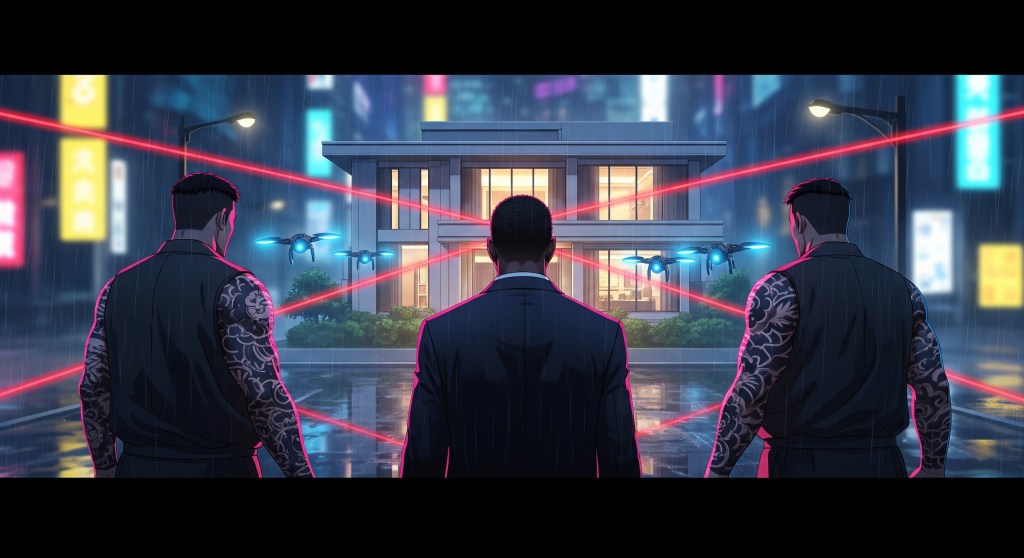
ターゲットの屋敷は、難しげなセキュリティシステムで守られていた。
たーげっと の やしき は、 むずかしげな せきゅりてぃしすてむ で まもられていた。
The target’s mansion was protected by a difficult-looking security system.
A’ight, so peep this. 〜げ is all about the vibe someone’s givin’ off. It’s that look in their eye, the way they carry themselves. You ain’t in their head, you don’t know what they’re really feelin’, but you can see the broadcast. It’s when you look at your homie who just lost a turf war and he got that sad look on his face. He ain’t sayin’ nothin’, but you see it. That’s 〜げ. It’s the “lookin’ like,” the “seemingly,” the “aura of.” It’s for when you’re sizin’ someone up on the outside. You feel me? It’s less about facts and more about the front they’re puttin’ up.
Here’s the 4-1-1 on how you hook this grammar up.
| Type | Dictionary Form | 〜げ Form | Hiragana | Translation |
| i-Adjective | 寂しい (さびしい) | 寂しげ | さびしげ | Lonely-looking |
| na-Adjective | 不安な (ふあんな) | 不安げ | ふあんげ | Anxious-looking |
| Verb (たい form) | 言いたい (いいたい) | 言いたげ | いいたげ | Looking like one wants to say something |
| Special | 良い (よい) | 良さげ | よさげ | Seemingly good |
| Special | 無い (ない) | 無さげ | なさげ | Seemingly non-existent |
For your i-adjectives, you just drop that final い and slide げ right in there. Easy money. For na-adjectives, you do the same damn thing—get rid of the な and attach げ. It’s that simple. Now, what’s cool is you can even use it with verbs if you wanna talk about what someone wants to do. Just take the たい form of a verb, like 言いたい (iitai – want to say), drop the い, and you get 言いたげ (iitage – lookin’ like you wanna say somethin’). Remember that 〜げ itself acts like a na-adjective, so if you’re connecting it to a noun, you gotta add that な. For example, 寂しげな顔 (sabishige na kao) – a lonely-lookin’ face.
Now before we move on, there is the vintage classic form we can touch on.
Here’s the side-by-side comparison. The main joint you’ll be slingin’ versus that rare, vintage classic.
| The Lowdown | The Main Gig (Verb-たい + げ) | The Old School Classic (Verb Stem + げ) |
| The Blueprint (How to make it) | Take the verb’s 〜たい form, drop the final い, and add げ.e.g., 言いたい → 言いたげ | Take the verb stem (the 〜ます form without the ます), and add げ.e.g., 泣きます → 泣きげ |
| The Vibe (What it means) | Looks like they wanna do somethin’. It’s all about DESIRE. | Looks like they’re ’bout to do somethin’. It’s about the ACTION being imminent. |
| The Turf (When to use it) | Your everyday weapon. Use this on the streets, in modern Japanese. This is the 99%. | Super rare. Found in novels, old flicks, poetic stuff. Not your daily driver. |
| The Evidence (Example) | 彼は何か言いたげだ。(Kare wa nanika iitage da.) He looks like he wants to say something. | 彼は泣きげな顔をした。(Kare wa nakige na kao o shita.) He made a face that looked like it was about to cry. |
So there it is, all mapped out
Think of it like this: you’re at a high-stakes poker table with the head of a rival crew. You can’t see his cards, you ain’t a mind reader, ya dig? But you can see his face. He’s got this little smirk, this confident 自信ありげな (jishin arige na) look. He looks like he’s holding a royal flush. That vibe he’s puttin’ out, that “I got this” aura? That’s the whole essence of 〜げ. It’s the “tell” you see on the outside, the appearance that hints at what’s goin’ down on the inside. You’re not sayin’ he has the winning hand, you’re sayin’ he looks like he does.
Check out these words to keep your vocabulary on point.
退屈 (たいくつ)
English: Boredom; tedious.
“Taikutsu” is when ain’t nothin’ poppin’. It’s that dead time when the block is quiet, the phone ain’t ringin’, and there’s no paper to be made. You just sittin’ there, watchin’ the paint peel. It’s that feeling you get when you’re stuck in the house with no hustle, no beats, just straight-up nothin’. It’s the opposite of the grind, you dig? Pure, straight-up boredom.
自信 (じしん)
English: Confidence; self-assurance.
Now this right here, “jishin,” this is the key to the whole damn game. It’s that swagger you carry, that ice in your veins. It’s how a rapper steps on stage like he owns the world, or how a kingpin walks into a room and everyone shuts up. It ain’t about being loud; it’s about that deep-down belief that you the man, that you got this, no matter what goes down. You can’t buy it, you gotta build it. That’s jishin.
挑発する (ちょうはつ する)
English: To provoke; to taunt.
“Chouhatsu suru” is when you start talkin’ reckless to get a reaction. It’s when you get in someone’s face, testin’ ’em to see if they gonna step up. Think of a rap battle, spittin’ bars to break your opponent down, or mean-muggin’ some cat from a rival crew just to see what he’s made of. You’re pushin’ buttons, throwin’ shade, basically askin’ for smoke. It’s a dangerous game, but sometimes you gotta play it.
微笑む (ほほえむ)
English: To smile.
Check it, “hohoemu” ain’t just any smile. It ain’t that big, goofy grin. This is that subtle joint, that little smirk. It’s the look you give your crew when a plan comes together perfectly. It’s that quiet cool of a cat who knows he’s holding all the cards at the poker table. It ain’t loud, it’s confident. It says, “I see you, I know what’s up, and I’m five steps ahead.” That’s the power of that “hohoemu.”
逃げ出す (にげだす)
English: To run away; to escape.
“Nigedasu.” Sometimes, the heat gets too hot, you know? This is when you gotta bounce. It’s when the five-o raids the spot and you dip out the back window. It’s when a deal goes bad and you gotta hit the gas and peel out before lead starts flyin’. It ain’t always about bein’ scared; sometimes it’s about bein’ smart. Livin’ to hustle another day. You gotta know when to hold ’em and when to “nigedasu.”
Here’s how you use this stuff in the real world, ya heard?
敵のボスは悔しげに地面に唾を吐いた。
てき の ぼす は くやしげに じめん に つば を はいた。
The enemy boss spat on the ground, looking frustrated.
彼女は悲しげな瞳で、もう会えないと言った。
かのじょ は かなしげ な ひとみ で、もう あえない と いった。
She said we couldn’t meet again, with a sorrowful look in her eyes.
見張りの男は退屈げに壁にもたれかかっていた。
みはり の おとこ は たいくつげ に かべ に もたれかかって いた。
The lookout was leaning against the wall, looking bored.
新しい武器を見たヤツは嬉しげにそれを手にとって調べていた。
あたらしい ぶき を みた ヤツ は うれしげ に それ を て に とって しらべて いた。
The dude who saw the new weapon picked it up and examined it with a look of joy.
敵のボスは自信ありげに、俺たちを挑発してきた。
てき の ボス は じしんありげ に、おれたち を ちょうはつして きた。
The rival boss confidently provoked us.
金を数えている彼は、満足げに微笑んだ。
かね を かぞえて いる かれ は、まんぞくげ に ほほえんだ。
Counting the money, he smiled with a look of satisfaction.
彼女の心配げな顔を見て、俺は何も言えなかった。
かのじょ の しんぱいげ な かお を みて、おれ は なにも いえなかった。
I saw the worried look on her face and couldn’t say anything.
ボスは意味ありげに俺の方を見て、頷いた。
ボス は いみありげ に おれ の ほう を みて、うなずいた。
The boss gave me a meaningful look and nodded.
逃げ出した男は必死げに、助けを求めていた。
にげだした おとこ は ひっしげ に、たすけ を もとめて いた。
The man who ran away was desperately asking for help.
銃を手にした彼は、得意げに笑っていた。
じゅう を て に した かれ は、とくいげ に わらって いた。
With the gun in his hand, he was smiling with a smug look.
Alright, that’s the word. Don’t be out here sounding like a rookie. Keep your ears open and your head on a swivel. Peace.

Leave a comment