

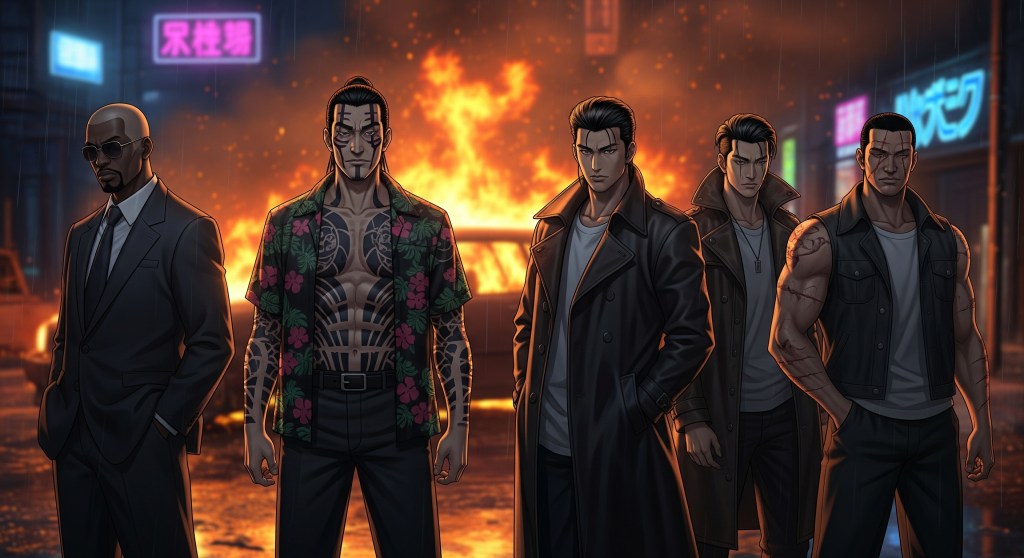
ばくはつ の あとで 、おれたち は しずかに その ば を さった。
bakuhatsu no ato de, oretachi wa shizuka ni sono ba o satta.
After the explosion, we quietly left the scene.
あとで (ato de) is how you let your crew know you’re gon’ handle business after you finish what you’re doin’ right now. It’s like a promise, a guarantee that the job will get done, but not right this second. It shows you’re a man of your word, but you ain’t gon’ rush somethin’ for nobody. It’s a key phrase for a boss who’s always got a plan.
Here’s how you hook up ~あとで with different verbs and nouns, so you don’t sound like a rookie on the streets.
| Form | Japanese (Hiragana) | English Translation |
| Verb Plain Form (た-form) | V-た あとで | After doing something… |
| Noun | Noun の あとで | After the noun… |
You feel me? When you linkin’ it up with a verb, you gotta put that verb in the た-form. That’s the past tense, ya heard? It’s like you gotta tell ’em the first action is done, it’s in the past, it’s wrapped up. If you just use the regular form, you ain’t tellin’ the whole story, and they gon’ think you’re still on the first thing. And with a noun, you just put a little の (no) in between. It’s like a little connecting piece, like a bridge between the noun and the phrase. It ain’t that complicated, but you gotta get it right.
It’s like stackin’ your cheddar. You gotta finish countin’ one stack before you move on to the next one. You ain’t gonna get your money straight if you countin’ multiple stacks at the same time. You messin’ up the whole operation, and that’s how you get caught slippin’. So, remember, one thing at a time, and the first thing gotta be wrapped up, locked down, and finished before you start the next thing. That’s the essence of ~あとで.
Check out these sentences. They’re all about that street life, ya know? Pay close attention to how ~あとで is used.
めし を くう (meshi wo kuu)
English: To eat a meal.
This ain’t about gettin’ some fancy dinner at a restaurant with all them forks and spoons. When we talkin’ ’bout meshi o kuu, we mean grabbin’ some grub, puttin’ somethin’ in your gut. It’s the street term for eatin’, like grabbin’ a slice after a deal or chargin’ up before you handle business. It’s simple, man. You hungry, you meshi o kuu.
シメる (shimeru)
English: To finish someone off; to tighten the screws.
Listen up. This one got a few layers, feel me? On the surface, it’s about puttin’ an end to somethin’—like shimete a deal, closin’ it tight so no one can mess with it. But in the streets, when we say we gon’ shimeru somebody, that means it’s over for ’em. You lock ’em down, put ’em in check, maybe rough ’em up a little. It’s about showin’ ’em who’s boss and makin’ sure they don’t step out of line again.
ボコボコにする (bokoboko ni suru)
English: To beat someone to a pulp; to leave someone battered and bruised.
This ain’t just a slap on the wrist. When you say you gon’ bokoboko ni suru somebody, you’re talkin’ ’bout a straight-up beatdown. It means you ain’t stoppin’ until they look like a car that got into a wreck—all dented and messed up. It’s violent, ruthless, and sends a clear message. You don’t wanna be on the receiving end of this one, trust.
もやす (moyasu)
English: To burn.
Moyasu is about straight-up fire. You can moyasu somethin’ just to get rid of it, like evidence or somethin’ you don’t want found. It’s about destroyin’ it completely, turnin’ it to ash so there’s nothin’ left but smoke. Think about it like a final answer to a problem. You moyasu it, and it’s gone for good. No trace.
みがく (migaku)
English: To polish; to refine.
Now, migaku is a little different. It ain’t about violence or gettin’ rid of somethin’. This is about makin’ somethin’ better, sharper. You migaku your skills, you migaku your reputation. It’s about puttin’ in that work to shine, to make somethin’ perfect and clean. Like a weapon or your game. You keep migaku, and you stay on top.
Check out these sentences. They’re all about that street life, ya know? Pay close attention to how ~あとで is used.
おれ は めし を くった あと で、ぎんこう を おそう。
Ore wa meshi o kutta ato de, ginkō o osou.
After I eat, I’m robbing the bank.
けいさつ が かえった あと で、とりひき を はじめよう。
Keisatsu ga kaetta ato de, torihiki o hajimeyō.
Let’s start the deal after the cops leave.
あにき が ねた あと で、アイツ を シメる。
Aniki ga neta ato de, aitsu o shimeru.
I’ll take care of that fool after my big bro goes to sleep.
しごと を おわらせた あと で、パーティー に いこう ぜ。
Shigoto o owaraseta ato de, pātī ni ikō ze.
After we finish the job, let’s go to the party.
やつ を ボコボコ に した あと で、ビール を のむ。
Yatsu o bokoboko ni shita ato de, bīru o nomu.
After I beat him up, I’m drinking a beer.
とりひき が すんだ あと で、くるま を もやそう。
Torihiki ga sunda ato de, kuruma o moyasō.
Let’s burn the car after the deal is done.
あいつ が さった あと で、おれたち が ボス に なる。
Aitsu ga satta ato de, oretachi ga bosu ni naru.
After he’s gone, we’re gonna be the bosses.
あにき に でんわ した あと で、けいかく を はなす。
Aniki ni denwa shita ato de, keikaku o hanasu.
After I call the boss, I’ll tell you the plan.
おれ は あさめし を たべた あと で、じゅう を みがく。
Ore wa asameshi o tabeta ato de, jū o migaku.
After I eat breakfast, I’m gonna clean my gun.
ぎんこう から でた あと で、おまえ と はなす。
Ginkou kara deta ato de, omae to hanasu.
I’ll talk to you after we get out of the bank
Keep it real, stay on your grind, and make that paper. Peace out.

Leave a comment