

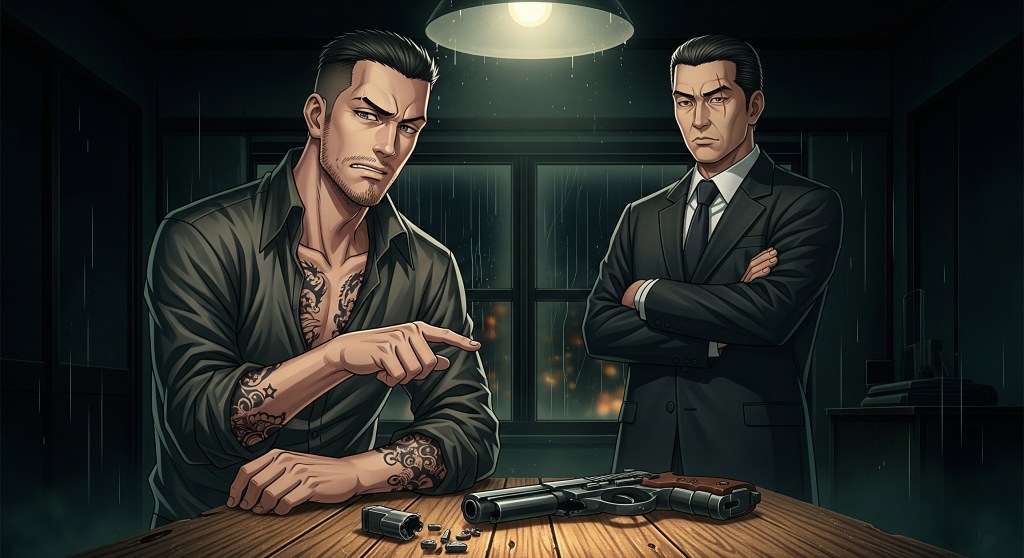
この じゅう は うたない。
Kono ju wa utanai.
This gun doesn’t fire.
Read the explanation below to understand the nuance of how this grammar structure is used.
The vibe of this form is like when your homie asks you to do something shady and you gotta hit ’em with a “Nah, fam, I’m good.” It’s direct, it’s casual, and it gets the point across without all the extra fluff. It’s the streetwise way of saying “I don’t” or “I won’t.”
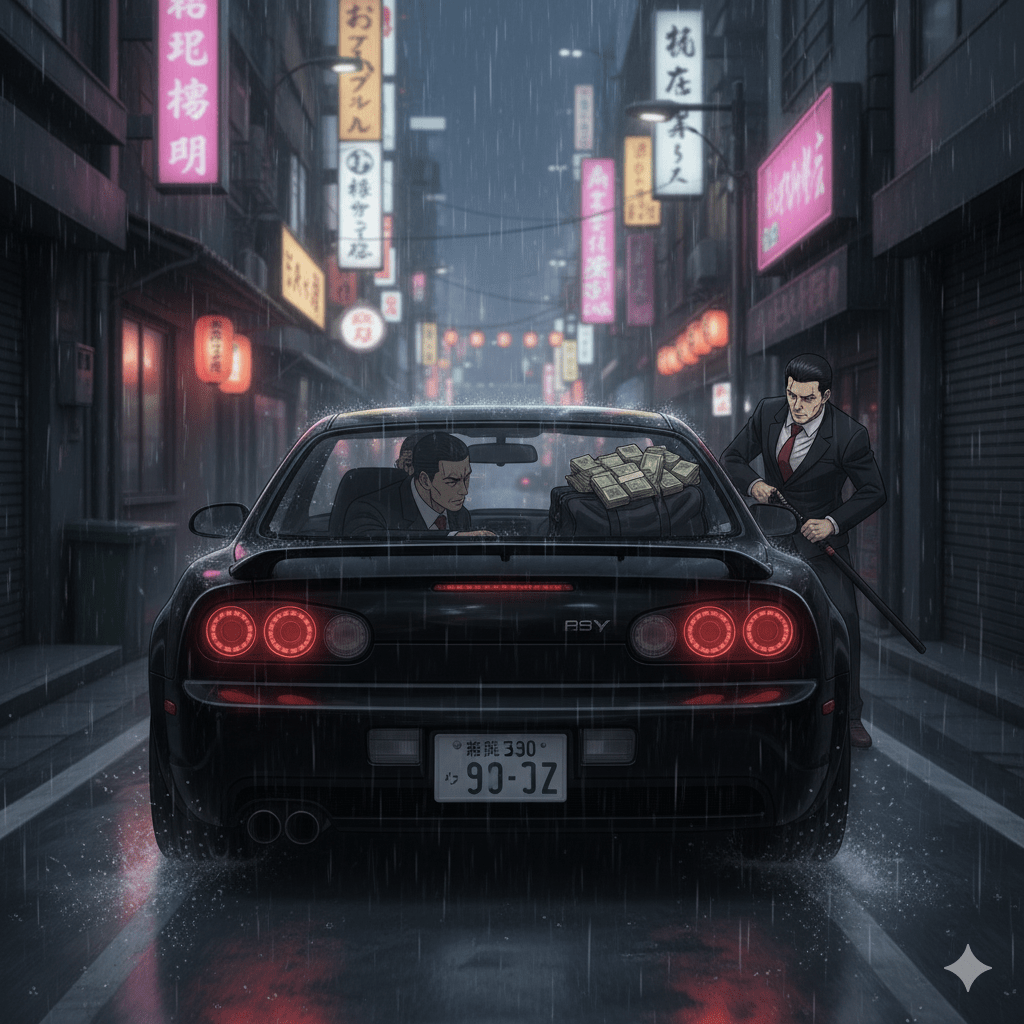
Think of the ない form as the getaway car after a hustle. The original verb is the heist itself—the action you’re planning to do. Adding ない is like jumping in the getaway car and peeling out of there. It’s the escape from the action. You were gonna go (いく, iku), but now you’re not going (いかない, ikanai). You were gonna eat (たべる, taberu), but now you’re not eating (たべない, tabenai). It’s the smooth exit from the situation.

Read the table below then use it to conjugate some words you know.
You gotta know how to flip these verbs to the negative form so you don’t get caught slippin’. Check the chart, memorize it, and you’ll be speaking the lingo in no time.
There is also a very casual form of this pattern. Just change “nai” to “nee” and you will instantly sound like you are from the streets.
| Verb Group | Ending | Example | |
| Group 1 | Change the final “-u” vowel to “-a” and add ない For verbs ending in う, it changes to わ | かう kau → かわない kawanai | don’t buy |
| Group 2 | Drop the final “-ru” and add ない | たべる taberu → たべない tabenai | don’t eat |
| Irregular | They got their own rules, ya dig? | する suru → しない shinai くる kuru → こない konai | don’t do don’t come |
For the verbs, you gotta change ’em from their ~masu form to their plain form before you stick ~nai on ’em. For Group 1 verbs, you change the last syllable from the “i” sound to the “a” sound and then add ~nai. For Group 2 verbs, you just drop the ~masu and add ~nai. Group 3 verbs are like the bosses, they got their own rules, you just gotta memorize ’em.

Listen to and repeat the sentences below.
おれたち は けいさつ に は なにも いわない。
Oretachi wa keisatsu ni wa nanimo iwanai.
We ain’t sayin’ nothin’ to the cops.
こんや、てき を ころさない。
Kon’ya, teki wo korosanai.
We ain’t killin’ the opps tonight.
くすり は うらない。
Kusuri wa uranai.
I ain’t sellin’ drugs.
ち が とまらない。
chi ga tomaranai.
The blood won’t stop.
きょう の とりひき は しない。
Kyou no torihiki wa shinai.
We ain’t doin’ the deal today.
し を おそれない。
shi o osorenai.
I don’t fear death.
この まち を はなれない。
Kono machi wo hanarenai.
I ain’t leavin’ this city.
えんぐん を またない。
Engun o matanai.
I don’t wait for backup
おれたち は けっして まけない。
Oretachi wa kesshite makenai.
We ain’t never gonna lose.
おまえ の かお を わすれない。
omae no kao o wasurenai.
I won’t forget your face!
Yo, mad respect. You handled the explanation, the nuance, and the conjugation like a boss. I see you tightening up your flow with that shadowing, too.

But check game—if you really tryna be certified and lock this down? You need to cop that N5 workbook, The Grind.
It’s packing five plays for every point so you can handle your business.
Stay Dangerous

Leave a comment