

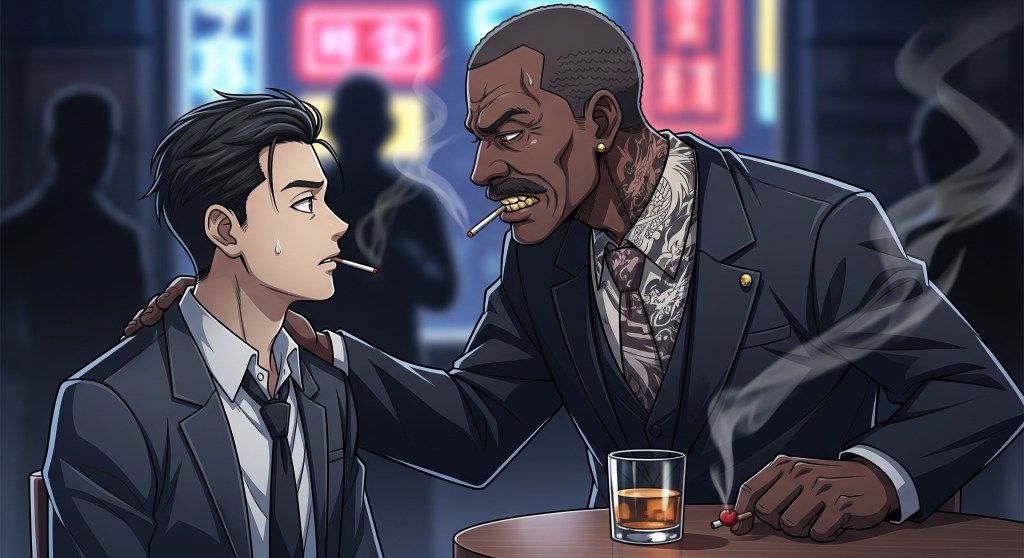
この こと は だれ にも いわない ほう が いい。
kono koto wa dare nimo iwanai hō ga ii.
You better not tell anyone about this.
This right here is how you tell someone they better do something, or you’re giving them some serious advice. It’s like a warning from your O.G., the one who’s seen it all and knows what’s gonna go down if you mess up. This ain’t a suggestion; it’s a solid piece of wisdom you’d be a fool to ignore. It’s the difference between being on top and being buried six feet under.
Check it, here’s the lowdown on how to put this together. Peep the table below to see how we conjugate this thing.
| Verb Form | English Translation | Hiragana |
| Dictionary form + ほうがいい | Should do | 〜ほうがいい |
| Negative form + ほうがいい | Should not do | 〜ないほうがいい |
You ain’t gotta be a rocket scientist to figure this out. You just take the verb, slap on 〜ほうがいい, and you’re good to go. For example, if you wanna say “you should go,” you take 行く (iku), which is the dictionary form, and you just put 〜ほうがいい right after it. So it becomes, 行ったほうがいい (itta hō ga ii). See how that works? For the negative, you just gotta put the verb in its negative form first. So, if you wanna say “you shouldn’t go,” you take 行く (iku), make it negative, which is 行かない (ikanai), and then you add 〜ほうがいい. Easy peasy, right? 行かないほうがいい (ikanai hō ga ii). It’s all about knowin’ your verb forms, ya dig?
The metaphor I use for this is a street corner with two paths. One path is smooth, lit up, and leads straight to the bag. The other one is dark, full of potholes, and ends in a dead-end with some shady characters waiting for you. When you use 〜ほうがいい, you’re the one who’s been down both paths. You’re telling your rookie, “Yo, you better take the lit-up path. Trust me on this one.” It’s a heads-up, a gentle nudge, but with the weight of experience behind it.
Here’s some slang to get you on the level:
けんか を うる (Kenka o uru)
English: To pick a fight.
Yo, listen up. When someone’s all in your face, lookin’ for trouble, they ain’t just lookin’ to scrap. They’re picking a fight. It’s like they’re sellin’ that beef, you feel me? You see that homie across the street lookin’ at you sideways? Yeah, he’s tryna sell that beef. He’s lookin’ to start some mess. That’s what this phrase means, straight up.
せんぷくする (Senpuku suru)
English: To lay low; to go into hiding.
After you just pulled off a big score, you gotta fall back and lay low. That’s when you disappear from the streets for a minute, you know? Go ghost so the heat don’t find you. It’s like when the cops are hot on your tail, you gotta go into hiding. That’s exactly what this is, layin’ low ’til the coast is clear.
ぶき (Buki)
English: Weapon.
Every soldier needs their weapon, you know? It ain’t just about fists and all that. I’m talkin’ about the real deal, the tools you need to handle your business. A shiv, a blicky, a stick—whatever you gotta have to stay safe and on top. That’s your weapon, your piece.
ようじんする (Youjin suru)
English: To be cautious; to be careful.
Look, the streets ain’t no playground. You always gotta watch your back. You gotta be on high alert for fakes and snakes. That’s what this is—being cautious, watching your surroundings, and stayin’ on point so nobody gets the drop on you. It’s about bein’ smart, not paranoid. Always keep your eyes peeled.
しじ (Shiji)
English: Instructions; orders.
Every crew needs a leader, and when the boss speaks, you listen. His orders ain’t suggestions; they’re the law. You gotta follow his instructions to a T if you wanna be part of the crew. It’s how we stay organized and get things done without messin’ up. It’s the plan, the game plan.
Alright, peep this, here are some examples of when you’d use 〜ほうがいい in the life.
ようじん した ほう が いい。
yōjin shita hō ga ii.
You better be careful.
けんか を うらない ほう が いい。
kenka o uranai hō ga ii.
You better not pick a fight.
あにき に うそ を つかない ほう が いい。
aniki ni uso o tsukanai hō ga ii.
You better not lie to the boss.
ぶき は かくした ほう が いい。
buki wa kakushita hō ga ii.
You better hide the weapons.
かね を ちゃんと かえした ほう が いい。
kane o chanto kaeshita hō ga ii.
You better return the money properly.
いま は せんぷく した ほう が いい。
ima wa senpuku shita hō ga ii.
You better lay low right now.
おれ の しじ に したがった ほう が いい。
ore no shiji ni shitagatta hō ga ii.
You better follow my orders.
あの なわばり では、ひとり で いかない ほう が いい。
ano nawabari dewa, hitori de ikanai hō ga ii.
You better not go to that turf alone.
けいさつ が きたら、だまっていた ほう が いい。
keisatsu ga kitara, damatteita hō ga ii.
If the cops show up, you better keep your mouth shut.
ほうふく される まえ に、にげた ほう が いい。
hōfuku sareru mae ni, nigeta hō ga ii.
You better bounce before they get their revenge.
Stay dangerous, my young G’s.

Leave a comment