


かれは きょう、くみの かねを はこびます。
Kare wa kyou, kumi no kane o hakobimasu.
He will transport the gang’s money today.

Read the explanation below to understand the nuance of how this grammar structure is used.
Using ます is like putting a suppressor on your pistol. It smooths things out. It’s the polite form of a verb. In Japanese culture, hierarchy is everything. If you talk to your boss the same way you talk to your homie on the corner, you gonna lose a finger.
Think of Stringer Bell from The Wire. When he’s on the corner, he’s hard. But when he’s in that boardroom trying to get those permits? He’s proper. He’s articulate. That’s ます. It shows respect, distance, and professionalism.
When to use it:
- Talkin’ to the Boss: You don’t say “I do it.” You say “I shall handle it, Boss.”
- Talkin’ to the 5-0 (Police): If you get pulled over, you don’t want to give them a reason to rough you up. You use
ますto play the innocent civilian role. - First Impressions: When you meeting a new plug or a rival gang leader for a truce.
Present and Future Tense Usage
The ます form is used for both present and future tense. The specific meaning is determined by the context of the sentence.
Present Tense: It can express a habitual action, a current state, or a general fact.
Example:
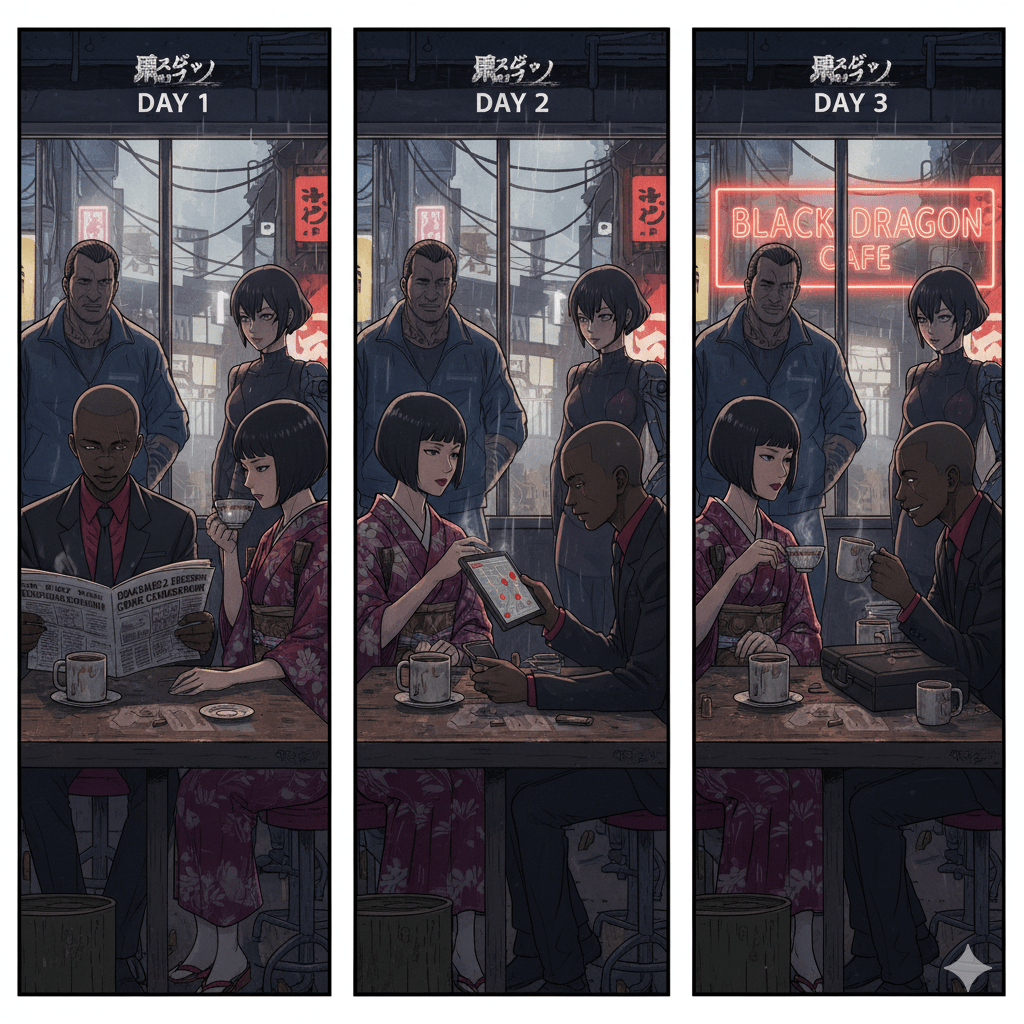
まいにちコーヒーをのみます
Mainichi kouhii o nomimasu.
This means “I drink coffee every day”
(habitual action).
Future Tense: It can express an action that will happen in the future. This is often indicated by a time word like “tomorrow” or “next week.”
Example:
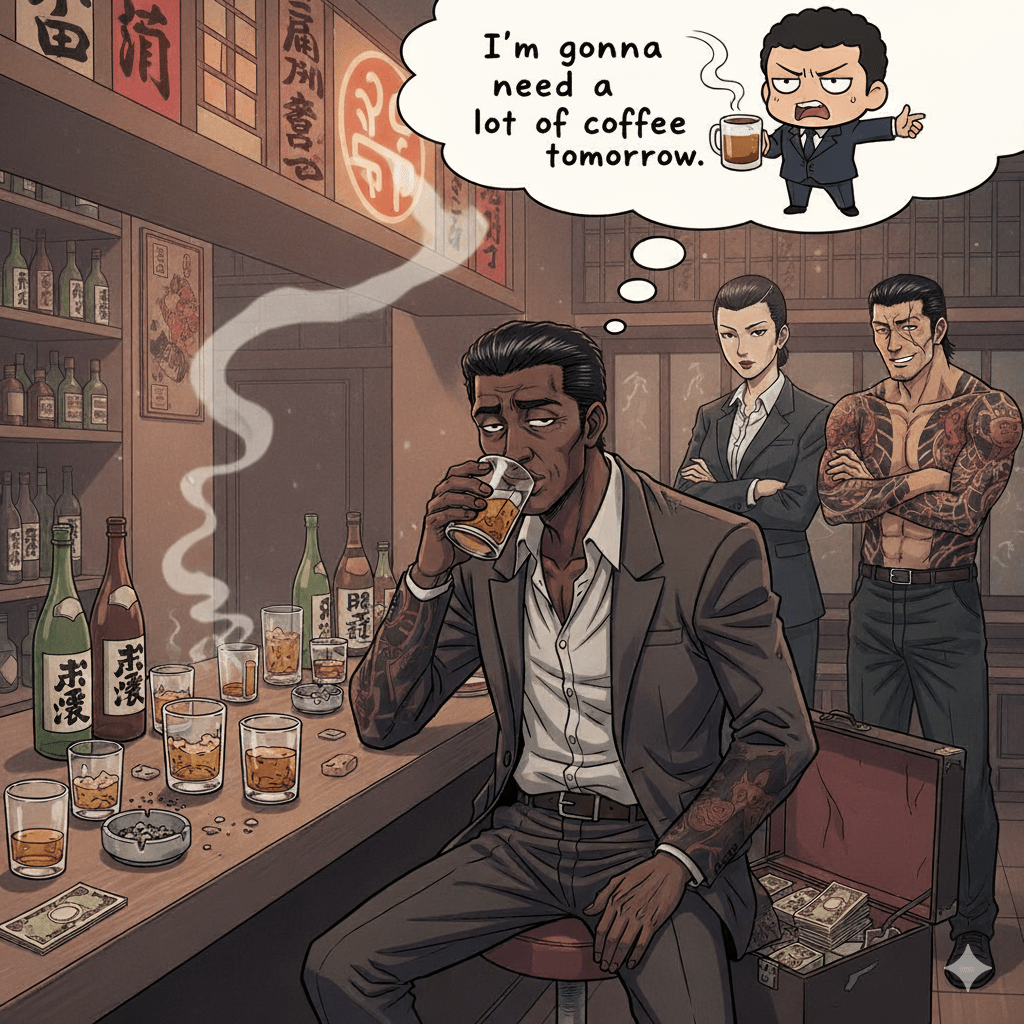
あした、コーヒーをのみます
Ashita kouhii o nomimasu.
This means “I will drink coffee tomorrow”
(future action).

Read the table below then use it to conjugate some words you know.
This table is your cheat sheet. Study it, memorize it, and you won’t get caught slippin’.
| Verb Group | Conjugation |
| Group 1 (Godan Verbs) | Change the last character from the u-vowel sound to the i-vowel sound and add ます. いく =いきます I go |
| Group 2 (Ichidan Verbs) | Drop the final る and add ます. たべる =たべます I eat |
| Irregular Verbs | These two are a whole different beast. You just gotta know ’em. する =します I do くる =きます I come |
For the majority of verbs (Group 1), you takin’ that last syllable, which always rhymes with “Who,” and you shifting it to rhyme with “Me.” So Ku becomes Ki, Mu becomes Mi, Su becomes Shi. Then you slap masu on the end. It’s like rhyming in a rap verse; you just gotta catch the flow. For Group 2, it’s easy work—chop off the ru tail and glue masu on. Done.

Listen to and repeat the sentences below.
あした、こうそうが はじまります。
Ashita, kousou ga hajimarimasu.
A gang war will start tomorrow.
やつらの アジトに、かちこみに いきます。
Yatsura no ajito ni, kachikomi ni ikimasu.
We are going to raid their hideout.
わたしは あたらしい くみに はいります。
Watashi wa atarashii kumi ni hairimasu.
I will join a new gang.
みはりを やります。
Mihari o yarimasu.
I will be the lookout.
まいにち、おれの くるまを あらいます。
Mainichi, ore no kuruma o araimasu.
I wash my car every day.
ボスは いつも おいしいものを たべます。
Bosu wa itsumo oishii mono o tabemasu.
The boss always eats delicious things.
わたしは いつも くみの ことを かんがえます。
Watashi wa itsumo kumi no koto o kangaemasu.
I always think about the gang.
てきは あの ビルの なかに います。
Teki wa ano biru no naka ni imasu.
The enemy is inside that building.
あの みせで、あたらしい けんじゅうを かいます。
Ano mise de, atarashii kenjū o kaimasu.
I will buy a new pistol at that store.
てきの くみと あした、あいます。
Teki no kumi to ashita, aimasu.
I will meet with the rival gang tomorrow.
Yo, mad respect. You handled the explanation, the nuance, and the conjugation like a boss. I see you tightening up your flow with that shadowing, too.

But check game—if you really tryna be certified and lock this down? You need to cop that N5 workbook, The Grind.
It’s packing five plays for every point so you can handle your business.
Stay Dangerous

Leave a comment