

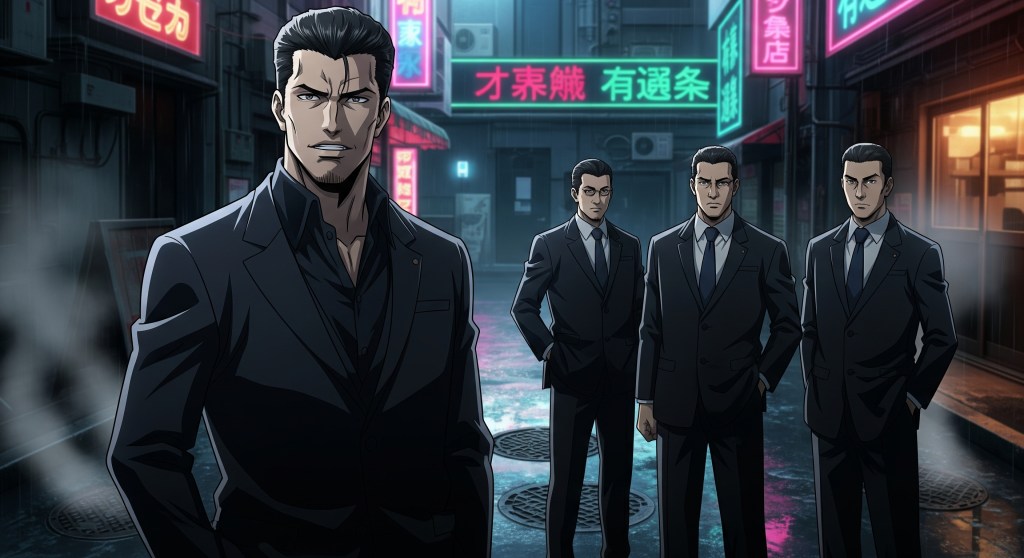
うちの くみ は まけぐみ じゃない。
uchi no kumi wa make gumi janai.
My crew isn’t a bunch of losers.
This right here, 「じゃない」(janai), is how you tell somebody “it ain’t that” or “that’s not what’s up.” It’s the negative form of 「です」(desu) or 「だ」(da) when you’re talkin’ about nouns and na-adjectives. It’s like you’re correcting someone’s wrong info, or just straight-up sayin’ something is not what they think it is. It’s a straight-up “nah, that ain’t it” type of vibe. In the streets, you gotta be clear about what’s true and what ain’t. If someone says, “yo, is this your corner?” and it ain’t, you hit ’em with the 「じゃない」(janai). It keeps the peace and avoids any misunderstandings. This ain’t some fancy talk; this is the real deal, for when you gotta set the record straight.
Yo, peep this table to get the lowdown on how to put this together. It’s a straight-up formula, no tricks.
| English Translation | Hiragana | Japanese |
| is not / am not / are not | じゃ ない | じゃ ない |
Now, listen close. This ain’t like conjugatin’ verbs and adjectives where you gotta change the whole word. With じゃない, it’s a straight-up tag-on. You got a noun, and you just slap じゃない right after it. Simple as that. A noun is a person, place, or thing, ya dig? So if you wanna say “It’s not money,” you just say “お金 じゃない.” That’s the whole game right there. It’s a piece of cake.
Think of 「じゃない」(janai) like you’re the head of the crew, and you’re layin’ down the law. A new cat comes up and says, “Yo, boss, is this a democracy?” You gotta look ’em dead in the eyes and say, “Nah, fam, this ain’t no democracy. This is my kingdom.” The 「じゃない」(janai) is that “ain’t.” It’s the ultimate negation, the word you use when you gotta let everyone know what’s really real and what ain’t. It’s a power move, a declaration of what is and what isn’t. When you say 「じゃない」(janai), you’re not just denyin’ somethin’, you’re puttin’ your foot down and layin’ out the facts.
Let’s get into the vocab before we get to the sentences. These are words you’ll hear in any good flick about the streets.
あんぜん (Anzen)
English: Safe; secure.
Yo, you can’t be out here on these streets without knowin’ if your spot is safe. That means no rats, no snakes, and definitely no police. When you got the goods, you gotta make sure your crew and your whole operation are on lockdown, safe and sound. It’s about bein’ protected from all the danger out there, you feel me?
おとうとぶん (Otouto-bun)
English: Younger brother figure; protégé.
In this life, you ain’t got no real brothers from the same mother, but you got your crew. The homies you roll with. The otouto-bun is like the young dude you take under your wing, the little homie you show the ropes to. He’s loyal, listens to you, and looks up to you like a big brother. You protect him and teach him the game, just like Sonny did with Calogero in “A Bronx Tale.”
ケツもち (Ketsumochi)
English: Protector; backup.
Every real hustler needs a protector, somebody powerful who’s got their back. When you’re slangin’ on the block, you need a ketsumochi to make sure nobody messes with your business. They’re the ones who give you the green light and the muscle to handle any beef. They’re your insurance policy. Think of it like when Biggie had Puff Daddy’s backing—that’s that kind of power.
カタギ (Katagi)
English: Law-abiding citizen; regular person.
We all know there are two types of people in this world: us and them. The katagi are the “them.” They’re the regular folks who work nine-to-five jobs, pay their taxes, and ain’t got no business with the streets. They’re the civilians, the people you don’t wanna mess with unless you gotta. They’re not in the life, and you gotta keep it that way to keep the peace.
かんけい (Kankei)
English: Relationship; connection.
In this game, everything is about connections and the relationship you got with people. Who you know is everything. You got a good kankei with the right people, and doors will open for you. A weak relationship with your crew, and you’re out. It’s all about trust and respect. It’s like the bond between Snoop Dogg and Dr. Dre—a powerful connection that made history.
Alright, here are some sentences so you can see how it works in the real world.
この みせ は おれ の じゃない。
kono mise wa ore no janai.
This shop isn’t mine.
おれ は カタギ じゃない。
ore wa katagi janai.
I’m not a law-abiding citizen.
その じょうほう は ほんとう じゃない。
sono jyouhou wa hontou janai.
That information isn’t true.
こいつ は ケツもち じゃない。
koitsu wa ketsu mochi janai.
This guy isn’t our protector.
この まち は おまえ の もん じゃない。
kono machi wa omae no mon janai.
This town isn’t yours.
あの しごと は かんたん じゃない。
ano shigoto wa kantan janai.
That job isn’t easy.
おれ たちの かんけい は ビジネス じゃない。
oretachi no kankei wa bijinesu janai.
Our relationship isn’t just business.
おれ は まだ おわり じゃない。
ore wa mada owari janai.
I’m not finished yet.
そいつ は おれ の おとうとぶん じゃない。
soitsu wa ore no otoutobun janai.
That guy isn’t my junior.
その ばしょ は あんぜん じゃない。
sono basho wa anzen janai.
That place isn’t safe.
Aight, that’s it for today’s lesson, y’all. Remember to use that 「じゃない」(janai) with some conviction, you feel me? Stay real, stay sharp.
Peace out.

Leave a comment