


ちんぴら に は のみもの を あげません。
Chinpera ni wa nomimono o agemasen.
We don’t give drinks to small-time thugs.

Read the explanation below to understand the nuance of how this grammar structure is used.
The -masen form is the polite, negative version of a verb. You use it when you’re speakin’ to the boss, the cops, or someone you ain’t tight with. It’s got that respect baked right in. The reason it can mean both “don’t” (negative present) and “won’t” (negative future) is all about how it’s used in a sentence. Japanese doesn’t have a separate verb form for the future tense. Instead, it uses the present tense to talk about future actions, and the context of the sentence makes the meaning clear. Think of it like this:
- Don’t: If you say, “まいにちおさけをのみません” (I don’t drink alcohol every day), the word “every day” sets the context to be a general truth, so it means “don’t.”

- Won’t: If you say, “あしたおさけをのみません” (I won’t drink alcohol tomorrow), the word “tomorrow” sets the context to be a future event, so it means “won’t.”
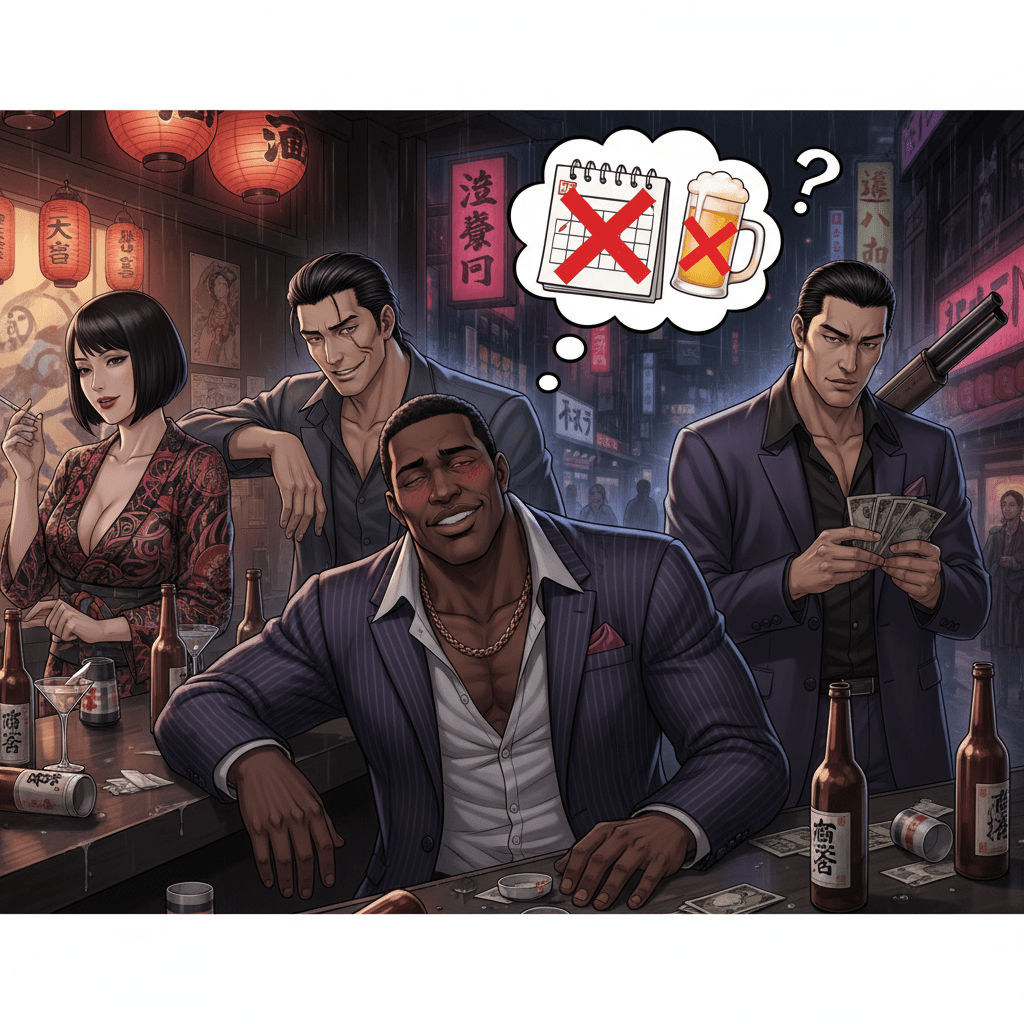
You can see how the time-related words (like “every day” and “tomorrow”) are the key to knowin’ if it’s a “don’t” or a “won’t.”
Imagine -masen is like a velvet rope at an exclusive club.

The verb is a cat tryna get in. When you hit it with -masen, you’re tellin’ that verb, “Yo, your name ain’t on the list. Not tonight, not ever.” It’s a hard shutdown. The action ain’t happenin’. You ain’t drinkin’, you ain’t goin’, you ain’t chillin’. The door’s locked.

Read the table below then use it to conjugate some words you know.
Peep the table below to see how we flip verbs into the negative.
| Verb Type | Rule | Example | -masen Form |
| Ichidan | Drop the final る (ru), add -masen | たべる (taberu) eat | たべません (tabemasen) don’t eat |
| Godan | Change the final U-vowel to an I-vowel, add -masen | のむ (nomu) drink | のみません (nomimasen) don’t drink |
| Irregular | Just remember | する (suru) do | しません (shimasen) don’t do |
| Irregular | Just remember | くる (kuru) come | きません (kimasen) don’t come |
Look, it’s simple. You take that verb that ends with ます (masu), you cut that ます (masu) right off, and then you slap on ません (masen). It’s like switchin’ out the mag in your clip. Quick, easy, and gets the job done. This rule applies to all verbs, so you ain’t gotta trip about no special cases. Just follow the code.

Listen to and repeat the sentences below.
Check out these sentences and see how we put -masen into action.
こんや は けんか を しません。
Konya wa kenka o shimasen.
We won’t get into a fight tonight.
やつ は かね を はらいません。
Yatsu wa kane o haraimasen.
That dude won’t pay the money.
この なわばり では まやく は うりません。
Kono nawabari de wa mayaku wa urimasen.
We don’t sell drugs in this territory.
けいさつ に は はなしません。
Keisatsu ni wa hanashimasen.
I won’t talk to the police.
やつ を しめません。
Yatsu o shimemasen.
I won’t beat him up.
かのじょ は おれたち を うらぎりません。
Kanojo wa oretachi o uragirimsen.
She won’t betray us.
この けいかく は しっぱいしません。
Kono keikaku wa shippai shimasen.
This plan won’t fail.
よわむし は ここ に は きません。
Yowamushi wa koko ni wa kimasen.
Cowards don’t come here.
おれ は やくそく を やぶりません。
Ore wa yakusoku o yaburimasen.
I don’t break promises.
その しのぎ は やりません。
Sono shinogi wa yarimasen.
I won’t do that hustle.
Stay solid, homie. Catch you on the flip side.
o, mad respect. You handled the explanation, the nuance, and the conjugation like a boss. I see you tightening up your flow with that shadowing, too.

But check game—if you really tryna be certified and lock this down? You need to cop that N5 workbook, The Grind.
It’s packing five plays for every point so you can handle your business.
Stay Dangerous

Leave a comment