

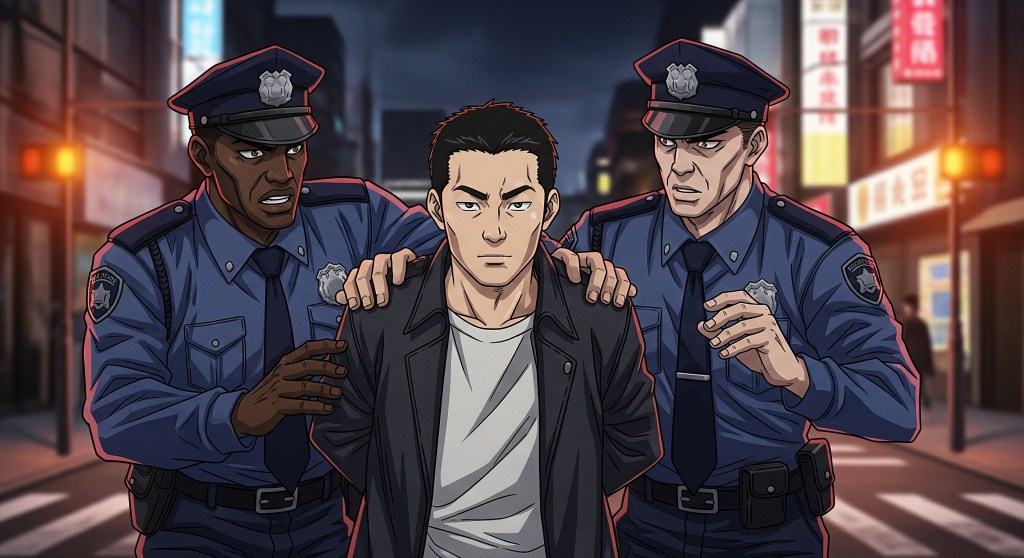
けいさつが 「ぱくるぞ」 って いってた。
Keisatsu ga “pakuru zo” tte itteta.
The cops were saying, “We’ll arrest you.“
Today, we’re gonna break down the grammar for quoting what someone said, what you heard, or what you thought. It’s all about them quotation markers, and we got two main ones for you: 「と」(to) and 「って」(tte). Think of these like the beats that set the tone for your whole sentence. They tell everyone, “Yo, the next words comin’ out my mouth, that’s the message.”
Understanding the Nuance
「と」 (to) is the more formal one. It’s like a crisp suit-and-tie for your words. You’d use this when you’re talking to your boss, an elder, or in a more serious situation. It’s clean, it’s respectful, and it’s straight to the point.
「って」 (tte) is the casual one. This is the hoodie and sneakers of the grammar world. You use this when you’re just kicking it with your crew, talking to your homies, or just keeping it real. It’s the street-level way to drop a quote, like the difference between saying “He said” and “He was like.”
This is an easy one, you can’t mess it up. Both と (to) and って (tte) just get tacked on right after the quote. You don’t gotta change the words inside the quote or nothing.
| Quote | Conjugation | Examples |
| Verb (plain form) | Verb + と / って | たべる taberu eat たべると taberu to たべるって taberu tte) |
| Noun | Noun + と / って | くるま kuruma car くるまと kuruma to くるまって kuruma tte |
| i-Adjective | i-Adjective + と / って | あつい atsui hot あついと atsui to あついって atsui tte |
| na-Adjective | na-Adjective + と / って | しずか shizuka quiet しずかと shizuka to) しずかって shizuka tte |
Think of と (to) as a bulletproof vest for your quote. When you got a critical message to deliver, you gotta protect it from getting mixed up with everything else. That vest is the armor that keeps it safe and clear. When you hear that vest click, you know the message is official.
Now, think of って (tte) as a hoodie. You ain’t always gotta be on high alert. Sometimes you just gotta be comfortable and casual. It still gets the job done, keeping your message protected, but it ain’t so rigid and formal. When you hear the hoodie zipping up, you know you’re just chilling with your words.
おいおい, check it. You want the real deal on these words, straight no chaser? Aight, let’s break it down, gangsta-style.
命じる (Meijiru)
English: To order; to command.
Yo, this is for when you’re the big dog, the one callin’ the shots. You don’t ask, you tell. You command your crew to go handle their business. Think of a mob boss tellin’ his soldiers what to do, like Vito Corleone in “The Godfather.” He don’t say “please,” he just says “do it.”
報告する (Houkoku suru)
English: To report; to inform.
After you send your crew out, they gotta come back and report to you. They gotta let you know if the mission was a success, what went down, and if there were any problems. This is all about gettin’ the intel. Like when Avon Barksdale from “The Wire” would have his lieutenants tell him everything that happened on the corners. You gotta stay in the loop to stay on top.
笑う (Warau)
English: To laugh; to smile.
This is when somethin’s funny, or maybe you just got the drop on your enemies. It’s the sound you make when you laugh at the world ’cause you know you’re runnin’ things. Or maybe it’s that cold smile you flash right before you make your move. That grin on O-Dog’s face in “Menace II Society” when he’s just clownin’, that’s what this is.
手を出す (Te o dasu)
English: To lay a hand on; to interfere; to get involved.
This one’s a warning, you feel me? It means to interfere or get your hands dirty. If someone’s messin’ with your territory, you gotta “lay a hand on them,” or you gotta “get involved” in the beef. It’s when you can’t just stand by and watch. Like when Jules and Vincent in “Pulp Fiction” had to handle that business with Marsellus Wallace’s briefcase. You gotta put your hands on the situation.
さけぶ (Sakebu)
English: To yell; to scream; to shout.
This word is when you ain’t just talkin’ loud, you yellin’ it. Like, when someone jacks your ride or somethin’ real crazy goes down, you don’t just speak up, you let out a shout. You might be screamin’ at your homie from across the block, or you might be screamin’ out of pure fear. Think about when that dude gets shot in the movie and he lets out that big scream. That’s this word.
Check out these examples, see how と is more serious, and って is more laid back.
Examples with 「と」
ボスは「あした の よる に しごと が ある」 といった。
Bosu wa “ashita no yoru ni shigoto ga aru” to itta.
The boss said, “There’s a job tomorrow night.”
アニキは 「これで おわりだ」 と おれに いった。
Aniki wa “kore de owari da” to ore ni itta.
My senior said to me, “This is the end.”
くみちょうは 「うらぎるな」 と おれたちに めいじた。
Kumichou wa “uragiru na” to oretachi ni meijita.
The gang leader ordered us, “Don’t betray us.”
「この とりひきは しっぱいした」 と かれは ほうこくした。
“Kono torihiki wa shippai shita” to kare wa houkoku shita.
He reported, “This deal failed.”
じゅうの おとが パン と きこえた。
Juu no oto ga pan to kikoeta.
I heard the sound of a gun go “bang.”
Examples with 「って」
あいつ、 「シャバはは さいこうだ」 って わらってたぜ。Aitsu, “shaba wa saikou da” tte waratteta ze.
That guy was laughing, “The outside world is the best.”
アニキに 「カタギには てを だすな」 って いわれた。
Aniki ni “katagi ni wa te o dasu na” tte iwareta.
My senior told me, “Don’t lay a hand on civilians.”
けいかんが 「しずかにしろ」 って さけんでた。
Keikan ga “shizuka ni shiro” tte sakendeteta.
The cops were yelling, “Be quiet.”
あいつ、 じぶんが やったって ことを みとめない。
Aitsu, jibun ga yatta tte koto o mitomenai.
That guy won’t admit that he did it.
「もう おわりに しようぜ」 って わかがしらが いったんだ。
“Mou owari ni shiyou ze” tte wakagashira ga ittan da.
The second-in-command said, “Let’s end this.”
Straight up, you get it now.

Leave a comment