

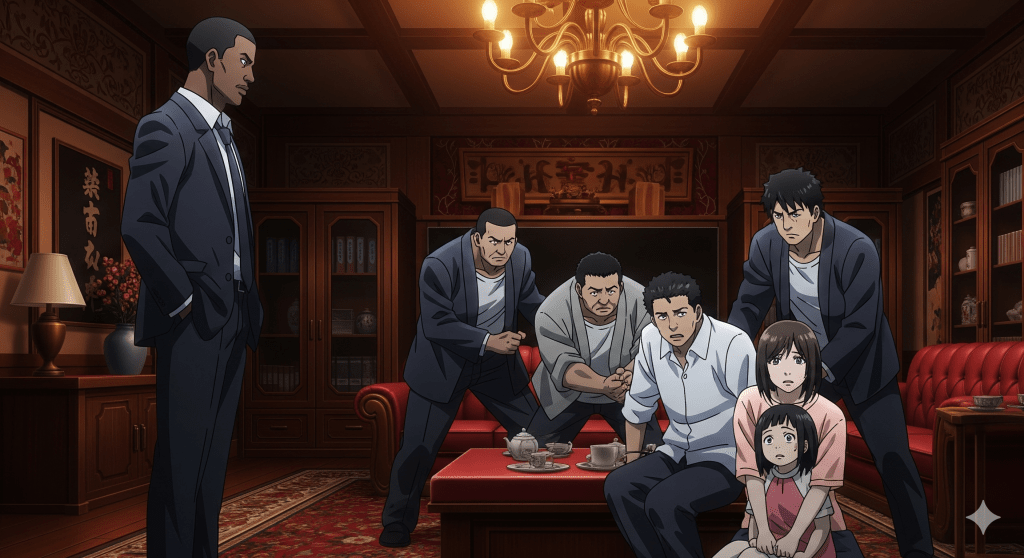
奴
の家族
を人質
に取
ればいい。
We should just take his family hostage.
The true flavor of ~ばいい is that it’s all about hope or a simple suggestion for the future. It’s you, leanin’ back in your chair, lookin’ at a plan and sayin’, “I just hope the lookout doesn’t fall asleep.” It hasn’t happened yet, but you’re laying out the ideal situation. It’s that simple hope for a good result.
Sometimes, you can use it to give some low-key advice to one of your crew, like, “You should just pay the man.” It’s not a heavy command; it’s more like pointing out the easiest path to get what you want. It’s a smooth, “all you gotta do is…” kinda vibe. It’s all about that desired future state, you feel me?
Here’s the 411 on how to put this joint together.
| The Crew (Type) | The Flip (The Rule) | The Score (Full Example) |
| u-verb 話す (hanasu) | Flip final ‘u’ to ‘e’ + ば 話せば | もっと金 を要求 すればいい。 You should just demand more money. |
| ru-verb 逃げる (nigeru) | Drop the る + れば 逃げれば | 裏口 から逃 げればいい。 You should just escape from the back door. |
| Irregular する (suru) | Just becomes すれば すれば | 奴 を始末 すればいい。 We should just take care of him. |
| Irregular 来る (kuru) | Just becomes 来れば 来れば | ブツが明日 来 ればいいな。 I hope the goods arrive tomorrow. |
| Negative (any verb) 言わない (iwanai) | Drop the final い + ければ 言わなければ | 警察 に何 も言 わなければいい。 It’d be good if you say nothing to the cops. |
| i-adjective 安い (yasui) | Drop the final い + ければ 安ければ | 武器 がもっと安 ければいいのに。 I wish the weapons were cheaper. |
| na-adjective 静か (shizuka) | Add なら or であれば 静かなら | 今夜 の街 が静 かならいい。 I hope the streets are quiet tonight. |
| Noun 雨 (ame) | Add なら or であれば 雨なら | 取引 の日 が雨 ならいいな。 I hope it rains on the day of the deal. |
Aight, so for the breakdown. For your standard u-verbs, you take that final う (u) sound and flip it to the え (e) sound. 書く (kaku) becomes 書け (kake). Then you just slap ば (ba) on the end.
For the ru-verbs, it’s a cakewalk. Just drop the る (ru) at the end and add れば (reba). So 見る (miru) becomes 見れば (mireba).
And for my two irregular players, you just gotta memorize ’em: する (suru) becomes すれば (sureba), and 来る (kuru) becomes 来れば (kureba). After you got that ば form down, you just add いい (ii) to finish it off. Easy money.
Think of ~ばいい like you’re planning a big score. You and your crew are huddled around a blueprint of a bank. You ain’t even left the safe house yet. You point to the getaway route and say, “The roads just need to be clear, and we’re golden.” You’re not regretting a past traffic jam; you’re just hoping for clear roads on the big day.
警察が来なければいい
(Keisatsu ga konakereba ii).
“It’d be good if the cops don’t show up.”
That’s ~ばいい. It’s that one key condition you’re hoping for, the one piece of the puzzle that makes the whole hustle work. It’s the “if only this happens…” that sets you up for a win.
Peep the new words we droppin’ in the examples below.
承認する (しょうにん する)
English: To approve; to greenlight; to give the go-ahead.
“Shounin suru” is when the big boss, the OG, gives you the nod. You come to him with a plan, a hustle, a move you wanna make. He listens, sizes it up, and if he messes with it, he gives you that greenlight. It’s like when the record label exec finally says, “Aight, drop the album,” or when the capo tells his crew, “Yeah, that score is a go.” Without that approval, you ain’t doin’ nothin’. It’s the official stamp, the go-ahead to make moves and get that paper.
ピンハネ (ぴんはね)
English: To skim; to take a cut; to wet your beak.
Listen up, ’cause this is some real street economics. “Pin-hane” is that sly move of taking a little off the top for yourself. Say you’re the middleman in a deal. The money passes through your hands, and you skim a little percentage off before it gets to the next man. It ain’t the whole pot, just a taste. Your connect sends you to collect a bag with ten stacks, you hand over nine and a half. That five hundred? That’s the “pin-hane.” It’s your fee for services rendered, your personal cut. But you gotta be slick with it, or you might get checked.
買収する (ばいしゅう する)
English: To buy out; to acquire; to take over.
This ain’t about coppin’ a new pair of kicks. “Baishuu suru” is big-money talk, playboy. This is when you’re movin’ so much weight, stackin’ so much cash, that you don’t just compete with the rival crew – you buy ’em out. You absorb their whole operation. One day they’re your competition, the next day they’re workin’ for you. It’s a straight-up power move, a corporate takeover, gangster-style. You flash a fat stack of cash and make ’em an offer they can’t refuse. That’s how you build an empire.
脅し (おどし)
English: A threat; intimidation.
Sometimes you don’t gotta pull the strap to get what you want. “Odoshi” is the art of puttin’ the fear of God in someone without layin’ a finger on ’em. It’s that look in your eye, that low-key comment about how you know where they live. It’s the implication of what could happen. Think of a scene in a gangster flick where the enforcer just stands there, lookin’ menacing while the boss talks. That presence? That’s “odoshi.” It’s a promise of violence, a way to make someone fall in line, quick. It’s all about that psychological warfare, you dig?
ビビれる (びびれる)
English: To be scared; to get shook; to chicken out.
Ain’t no one wanna be this dude. “Bibireru” is when you lose your nerve. You’re talkin’ a big game, but when it’s time to ride, you get shook. Your hands get sweaty, your knees start knockin’, and you back down. It’s that moment when you see the other crew roll up deep and you just freeze up. In the streets, and in the rap game, you can’t “bibireru.” You show fear, you lose respect. You hesitate, you get left behind, or worse. Stay solid, never let ’em see you sweat.
Here’s how you use it when you’re talkin’ business on the block.
ボスがこの計画
を承認
すればいいのだが。。
It’d be great if the boss approves this plan.
今日
の取引
がスムーズに進
めばいいな。
I hope today’s deal goes smoothly.
警察
が俺
たちのアジトを見
つけなければいい。
I hope the police don’t find our hideout.
もっと金
があればいいのに。
I wish I just had more money.
ターゲットが罠
にかかればいい。
I just hope the target falls into the trap.
新
しい縄張
りが手
に入
ればいい。
It would be good if we get some new turf.
今日
のカチコミがうまくいけばいい。
I hope today’s raid goes well.
ボスが俺
のピンハネに気
づかなければいい。
I hope the boss doesn’t notice the money I skimmed.
裁判官
が買収
できればいい。
I hope we can bribe the judge.
この脅
しで奴
がびびればいいのだが。
I hope this threat makes him chicken out.
Aight, class dismissed. Keep your grammar tight and your hustle strong.
Stay true, stay real. Holla back.

Leave a comment