

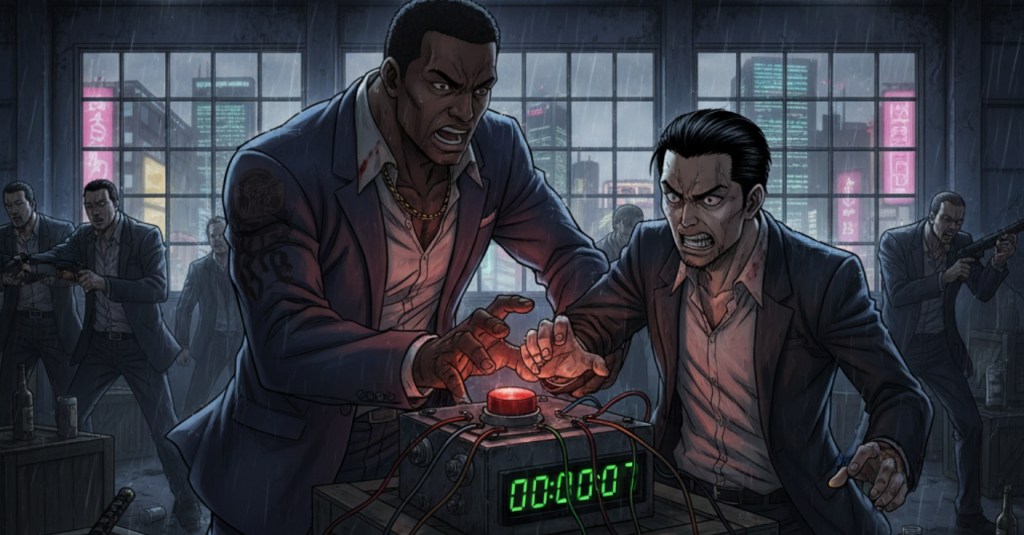
このボタンを押せば、すべてが爆発する。
If you press this button, everything will explode.

The ば (ba) grammar pattern is your go-to for sayin’ “if A happens, then B will definitely happen.” It’s all about that cause-and-effect, that natural consequence. It’s a hypothetical, but it’s a solid one. When you use ば, you’re sayin’ the first part is the only thing you need to make the second part a reality. No doubt, no maybes. It’s less about your personal will and more about how the world works, ya feel me? It’s the cold, hard truth of the streets.

Here’s the lowdown on how to cook up this grammar.
| Type | Form | Rule | Example | Translation |
| Group 1 (Godan) | 書く | Change final う (u) sound to え (e) sound + ば | 書けば | If you write… |
| Group 2 (Ichidan) | 食べる | Drop the る (ru) + れば | 食べれば | If you eat… |
| Irregular Verbs | する | Becomes すれば | すれば | If you do… |
| Irregular Verbs | 来る | Becomes 来れば | 来れば | If you come… |
| い-Adjectives | 高い | Drop the い (i) + ければ | 高ければ | If it’s expensive… |
| な-Adjectives | 静か | Add であれば / ならば | 静かならば | If it’s quiet… |
| Nouns | 金 | Add であれば / ならば | 金であれば | If it’s money… |
A’ight, so let’s break it down some more. For your regular Godan verbs, you just take that last sound, the u vowel, and flip it to an e vowel. So kaku becomes kake. Then you slap ば on the end. Easy money. For Ichidan verbs, it’s even simpler. Just slice off that る and stick れば on there. Done deal. For your adjectives and nouns, you usually just add であれば or the slightly more formal ならば. It’s like puttin’ rims on a ride—it just fits.

Think of the ば conditional like a line of dominoes set up for a big score. The first domino is your condition. Once you flick that first one (ば clause), what happens? The rest are guaranteed to fall, one after another, until you get to the end result. There’s no stopping it. It’s a chain reaction.
If you tip the first domino (お金があれば – if you have money)… then the last one will fall (何でも買える – you can buy anything).
It’s that simple. One action directly and naturally leads to the next. That’s the ば conditional. It’s the law of the streets.
Check out these examples straight from the underworld.
警察が来れば、ずらかるぞ!
If the cops come, we bounce!
刑務所に入りたくなければ、もっと賢くやれ。
If you don’t wanna go to prison, act smarter.
このアジトが安全でなければ、移動するしかない。
If this hideout ain’t safe, we have no choice but to move.
尊敬が欲しければ、力で示せ。
If you want respect, show it with strength.
ヘマをすれば、ボスは激怒するだろう。
If you mess up, the boss will probably be furious.
俺の計画に従えば、みんな金持ちになる。
If you follow my plan, everyone gets rich.
証拠がなければ、やつらを逮捕できない。
If there’s no evidence, they can’t arrest those guys.
毎日練習すれば、伝説の泥棒になれるかもしれない。
If you practice every day, you might become a legendary thief.
注意しなければ、すぐにパクられる。
If you ain’t careful, you’ll get pinched right away.
値段がよければ、そのヤマを引き受ける。
If the price is right, we’ll take on that job.
That’s the lesson for today, homies. Keep your head up and your grammar tight.

Leave a comment