

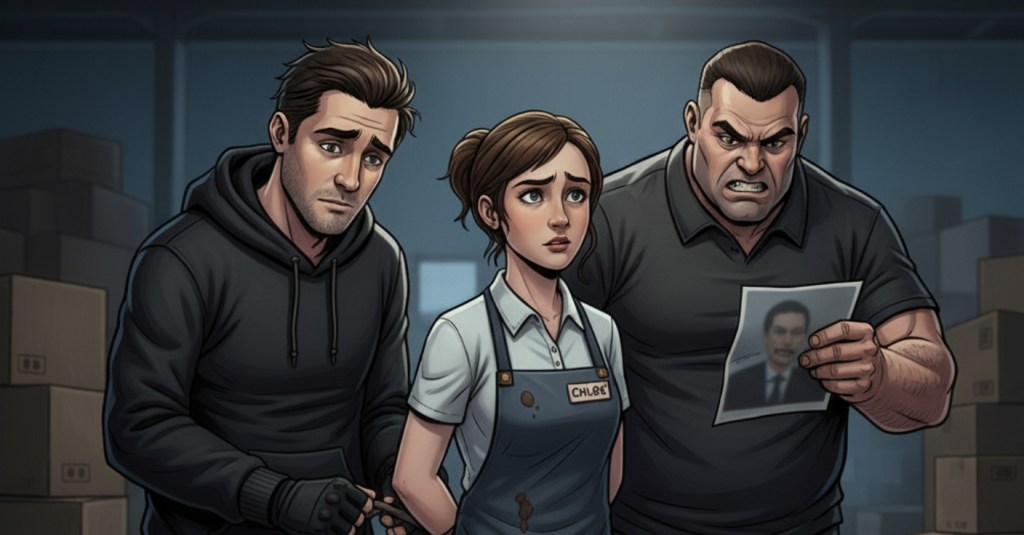
間違った人を誘拐してすみません。
I’m sorry for kidnapping the wrong person.
So, the nuance here ain’t just a simple “my bad.” This is a straight-up “I apologize for doing [this specific thing].” You’re pointin’ directly at the action that caused the problem. It’s for when you messed up, caused an inconvenience, and you gotta show some respect and say sorry for it. It’s heavier than a quick ごめん. You use this when you show up late to a meetin’, spill somethin’ on the boss’s expensive suit, or “accidentally” lose the getaway car keys. It’s about taking responsibility for the trouble you caused.

Think of it like this: You’re in a rap battle. You accidentally step on your opponent’s brand-new kicks. You can’t just say “Oops.” You gotta stop the beat, look ’em in the eye and say, “Yo, my apologies for steppin’ on your sneakers.” You’re specifically apologizing for that action. The action is the part in the te-form, and the apology is the すみません . You’re connecting your screw-up directly to your apology.

Task: Try to conjugate some different verbs to practice the rule.
Check the blueprint for how to build this piece.
| Verb Type | Dictionary Form | Te-form | Full Phrase | English Translation |
| u-verb (Group 1) | 盗む | 盗んで | 盗んですみません | I’m sorry for stealing. |
| ru-verb (Group 2) | 忘れる | 忘れて | 忘れてすみません | I’m sorry for forgetting. |
| Irregular (Group 3) | する | して | してすみません | I’m sorry for doing. |
| Irregular (Group 3) | 来る | 来て | 遅れて来てすみません | I’m sorry for coming late. |
To get this right, you gotta master your verb conjugations, ya heard? First, you take your verb and flip it into its te-form. For your ru-verbs (Group 2), it’s easy money: just drop the final る and add て. For the u-verbs (Group 1), you gotta know the rules—verbs ending in う, つ, or る change to って ; verbs ending in む, ぬ, or ぶ change to んで; verbs ending in く change to いて, and so on. Your irregulars, する and 来る, just gotta be memorized, G. They become して and 来て. Once you got that te-form locked down, you just slap すみません on the end, and you’re good to go.

Task: Try to shadow at least 5 sentences perfectly.
Aight, here’s how the real Gs use it on the block. Peep this.
ボスの車を壊してすみません。
I’m sorry for breaking the boss’s car.
指示を無視してすみません。
I’m sorry for ignoring the instructions.
アジトで大声で歌ってすみません。
I’m sorry for singing loudly at the safe house.
作戦について嘘をついてすみません。
I’m sorry for lying about the plan.
証拠をたくさん残してすみません。
I’m sorry for leaving a lot of evidence behind.
仕事中に寝てすみません。
I’m sorry for sleeping during the job.
大事な手紙を捨ててすみません。
I’m sorry for throwing away the important letter.
金庫の番号を忘れてすみません。
I’m sorry for forgetting the safe’s combination.
秘密の隠れ家の場所を教えてすみません。
I’m sorry for telling them the location of the secret hideout.
あなたのピザを全部食べてすみません。
I’m sorry for eating all of your pizza.

Task: Try to guess what each word actually means.
Peep these words and see if you can pick up what I’m putting down.
壊す
[こわす]
Sometimes you just gotta tear it all down to build somethin’ new.
無視する
[むしする]
That’s what you do when some scrub ain’t even on your level.
指示
[しじ]
The word from the OG that you follow, no questions asked.
作戦
[さくせん]
It’s the whole crew’s blueprint for the come-up.
証拠
[しょうこ]
The kinda thing you make disappear so the five-o got nothin’ on you.
手紙
[てがみ]
Paper passed from one homie to another when you can’t speak face-to-face.
番号
[ばんごう]
Them digits that can either connect you to your crew or get you locked in a cage.
隠れ家
[かくれが]
The safe spot where you lay low when the heat is on.
The Straight Dope (Translations)
- 壊す (kowasu): To break; to destroy
- 無視する (mushi suru): To ignore
- 指示 (shiji): Instruction; order
- 作戦 (sakusen): Strategy; plan
- 証拠 (shouko): Evidence; proof
- 手紙 (tegami): Letter
- 番号 (bangou): Number
- 隠れ家 (kakurega): Hideout; safe house
Keep it real. One.

Leave a comment