

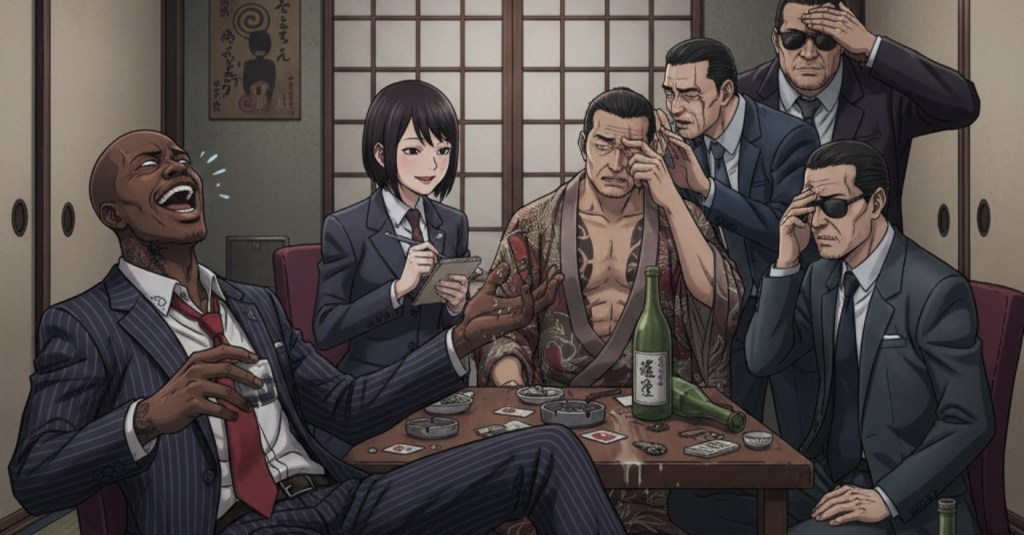
彼は酒を飲みすぎたら、秘密を全部話しちゃう。
If he drinks too much, he spills all the secrets.
Read the explanation below to understand the nuance of how this grammar structure is used.
Look, ~たら ain’t complicated. It’s all about cause and effect. It’s the setup and the punchline. Think of it like a street deal: IF you show me the money (Action A), THEN you get the product (Action B).
The most important thing to remember is that ~たら focuses on the completion of that first action. The “if” part has to happen or be finished before the “then” part can pop off.
~たら is that trigger. You pull it (Action A), the shot fires (Action B). Ya feel me? It connects the action to the consequence, straight up.
Think of ~たら like it’s the code to a safe. The first part of the sentence (the ~たら part) is you punching in the numbers. The second part of the sentence is the safe door swinging open.
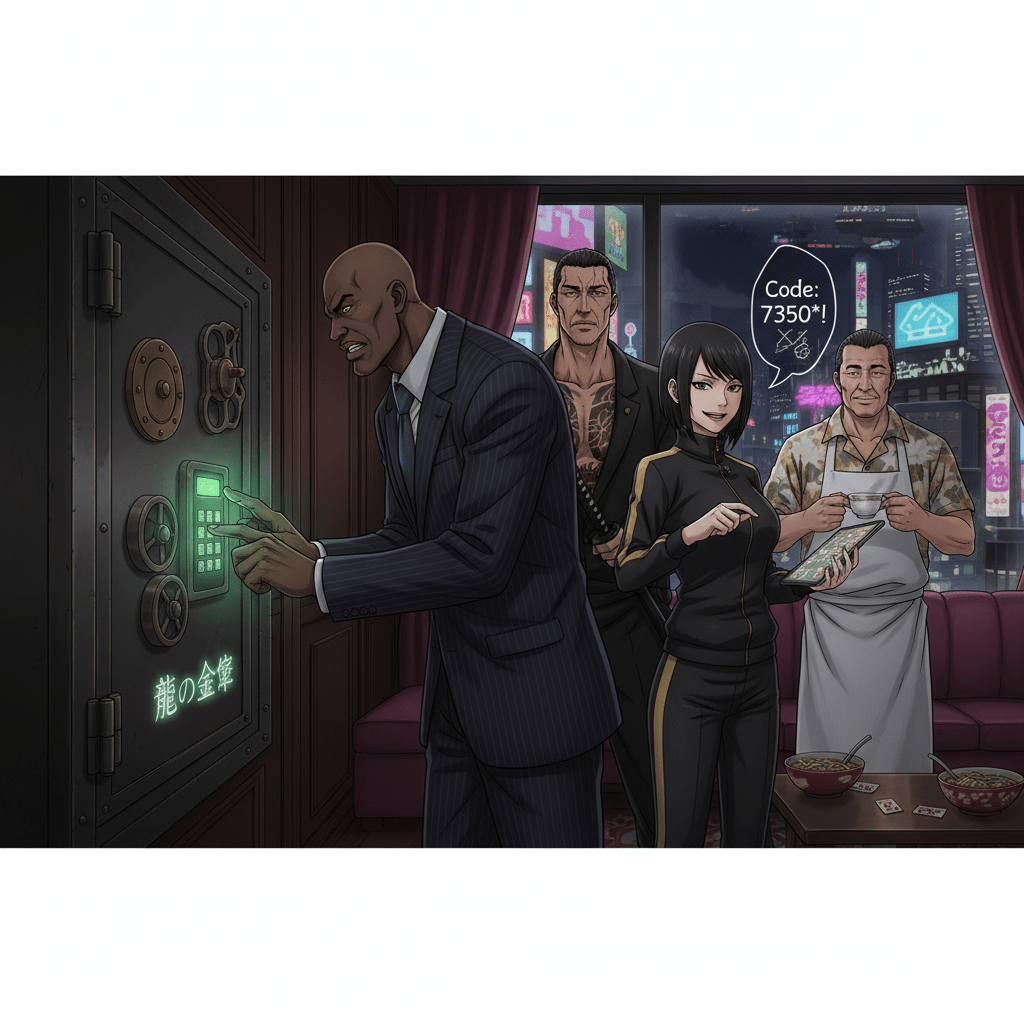
You can’t open the safe while you’re still punching the code. You gotta finish inputting the whole code first (Action A is complete). As soon as you hit that last number and the lock clicks (~たら)… boom, the door opens (Action B happens).
Now, sometimes we use たら to mean “when” and other times we use it to mean “if”. Don’t let it trip you up. It’s one of the cleanest parts of the grammar. It all comes down to context. It’s just about whether you’re talkin’ about a gamble or a plan.
Part 1: The “IF” — The Gamble (Hypothetical)
This is when you use ~たら for shit that might happen, or might not. It’s a hypothetical. You’re setting a condition. IF this joint pops off, THEN we do that.
You’ll often see this with もし (moshi) at the start of the sentence. もし is like a big, flashing sign that says “HYPOTHETICALLY” or “WHAT IF…” You don’t always need it, but it makes the “if” meaning crystal clear.
- もし 警察が来たら、逃げる。
IF the cops (hypothetically) show up, we bounce.
(We don’t know if they will, but that’s the plan if they do.) - もし 金がたくさんあったら、全部リスペクトされる。(Moshi kane ga takusan attara, zenbu risupekuto sareru.) IF I had a lotta money, I’d get all the respect.
(I don’t… but if I did…)
Part 2: The “WHEN” — The Plan (Sequential)
This is when you use ~たら for something you expect to happen. It’s not a gamble, it’s just the sequence of events. You’re talkin’ about what you’re gonna do after the first action is complete.
Think of it as “After A, then B.”
- 家に着いたら、電話する。
WHEN I get home, I’ll call you.
(I am going home. The action is getting home. The next action is calling.) - 仕事が終わったら、飲みに行こう。
WHEN work is finished, let’s go drink.
(Work will finish. That’s the trigger for the next move.)
So, let’s go back to that safe code metaphor.
- Using
たらas “IF” (The Gamble): This is like you find a random safe on the street. You don’t even know if it’s the right one. You say, “IF this safe code works (もしこのコードが使えたら), THEN we’re rich.” It’s a total hypothetical. - Using
たらas “WHEN” (The Plan): This is your own safe. You know the code. You’re just tellin’ your crew the plan. “WHEN I finish punchin’ in this code (コードを入れ終わったら), THEN you grab the bags.” It’s a guaranteed sequence. Action A (finishing the code) will happen, and it triggers Action B (grabbing the bags).
So, when you see ~たら, just ask yourself: Is this a “what if” gamble, or is it just “what’s next” in the plan? The context will tell you every time.

Read the table below then use it to conjugate some words you know.
It’s easy money. You just get the Ta-form (the short past tense) of your word and add ら (ra).
| Word Type | How to Make It | Example (Tara Form) | Translation |
| Group 1 Verb | Change to Ta-form + ら | 買う > 買ったら | If I buy |
| Group 2 Verb | Change to Ta-form + ら | 食べる > 食べたら | If I eat |
| Group 3 Verb | Change to Ta-form + ら | する > したら | If I do |
| I-Adjective | Change い to かった + ら | 高い > 高かったら | If it’s expensive |
| Na-Adjective | Add だったら | 静か > 静かだったら | If it’s quiet |
| Noun | Add だったら | 雨 > 雨だったら | If it’s rain |
Aight, so peep this. The whole trick is just knowing your Ta-form (past tense, short form). That’s the “did” form, like 食べた or 飲んだ. Once you got that, you just add ら (ra) to the end. That’s it. For your nouns and your na-adjectives, it’s always だったら. Don’t overthink it. 元気 becomes 元気だったら. ボス becomes ボスだったら. Simple.

Listen to and repeat the sentences below.
警察を見たら、すぐに逃げろ!
If you see the cops, bounce immediately!
お金がたくさんあったら、デカい車を買う。
If I had a lot of money, I’d buy a big car.
仕事が終わったら、飲みに行こうぜ。
When work is finished, let’s go drink.
カバンを開けたら、全部ニセ札だった。
When I opened the briefcase, it was all counterfeit money.
このボタンを押したら、全部爆発する。
If you press this button, everything explodes.
刑務所から出たら、一番高い寿司を食う。
When I get out of the joint, I’m eatin’ the most expensive sushi.
アリバイがなかったら、俺たちが捕まる。
If we don’t have an alibi, we’re gonna get caught.
この計画がうまくいったら、一生遊んで暮らせる。
If this plan goes well, we can live easy for the rest of our lives.
刑務所に入ったら、毎日筋トレするよ。
If I go to prison, I’m gonna work out every day.
仲間を裏切ったら、どうなるか知ってるだろ?
You know what happens if you betray the crew, right?
Aight, that’s the lesson. You got ~たら now. It’s easy, right? Use it right, and you’ll sound legit.
Keep it 100. Class dismissed.

Leave a comment