


このアジトは安全なようだ。
This hideout seems secure.

Read the explanation below to understand the nuance of how this grammar structure is used.
Aight, so ようだ is all about “it seems like,” or “it looks like.” But here’s the real tea: this ain’t just a wild guess. You ain’t just pullin’ this outta thin air.
You use ようだ when you got evidence. You’re lookin’ at the scene, you’re hearin’ the whispers, you’re smellin’ somethin’ in the air, and you’re makin’ a judgment call. It’s your personal observation based on what your senses are tellin’ you.
It’s like you see your homie countin’ a fat stack of cash and wearin’ new kicks. You don’t know he just hit a lick, but you can say, 「彼は最近儲かったようだ」– “Looks like he got paid recently.” You got reasons for thinkin’ it. It’s your take on the situation, straight up.

You use this joint all the time when you’re tryin’ to figure out a situation.
Peep this: You’re supposed to meet the crew at the safe house, but when you get there, the door is wide open, chairs are flipped over, and it’s dead quiet. You turn to your partner and say, 「何か問題があったようだ」– “Looks like there was some trouble.”
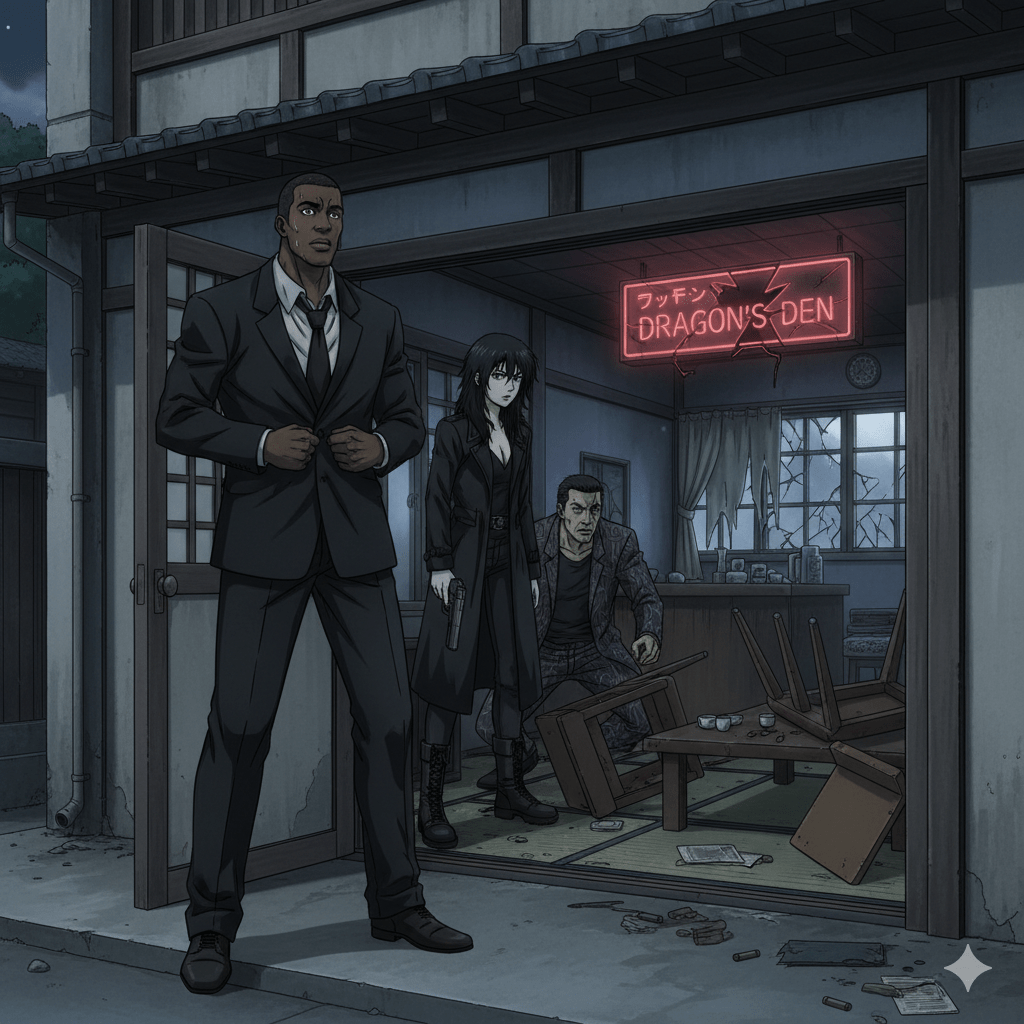
You don’t know what happened, but the evidence (the messy room, the open door) makes you judge that shit went down. It’s about readin’ the room, feel me?
Think of ようだ as bein’ the lookout for the crew. Your job ain’t to know exactly what the rival crew is plannin’. But you’re sittin’ there with binoculars, watchin’ their spot. You see three black cars pull up. You see dudes in suits get out, lookin’ serious. They ain’t carryin’ pizza.

You get on the walkie-talkie and say, “Yo, boss…敵が動くようだ” – “It looks like the enemy is makin’ a move.”
You didn’t read their minds, but based on the visual evidence, you’re makin’ a strong, informed judgment. That’s ようだ. It’s your “eyes-on” report.

Read the table below then use it to conjugate some words you know.
Aight, here’s the blueprint for how you hook this grammar up.
| Word Type | How to Connect | Example | English Translation |
| Verb | Plain Form + ようだ | 彼は逃げたようだ。 | It seems like he escaped. |
| i-Adjective | Plain Form + ようだ | ボスは忙しいようだ。 | The boss seems busy. |
| na-Adjective | Add な + ようだ | あの場所は静かなようだ。 | That place seems quiet. |
| Noun | Add の + ようだ | あれは警察のようだ。 | That looks like the police. |
Check it. This pattern is pretty simple. For your verbs and your i-adjectives, you just keep ’em in their plain form (dictionary form, past tense, negative form, whatever) and stick ようだ on the end. No sweat. The only hustle you gotta remember is for na-adjectives and nouns. For na-adjectives, you gotta slide that な in between, like 危険なようだ – seems dangerous). For nouns, you gotta link ’em with の like 偽物のようだ – seems like a fake). Don’t get caught slippin’ on that な and の.

Listen to and repeat the sentences below.
彼の話は全部嘘のようだ。
His whole story seems like a lie.
このIDは偽物のようだ。
This ID looks like a fake.
警察は俺たちに気づいたようだ。
Looks like the cops have noticed us.
彼はギャンブルが下手なようだ。
He seems to be terrible at gambling.
兄貴は高いスーツが好きなようだ。
Big bro seems to like expensive suits.
あの声、ボスが怒っているようだ。
That voice… seems like the boss is pissed off.
彼は金を持っていないようだ。
He doesn’t seem to have any money on him.
新入りはまだ緊張しているようだ。
The new guy still seems nervous.
彼は全然怖くないようだ。
He doesn’t seem scared at all.
ボスは何か隠しているようだ。
The boss seems to be hiding something.
Stay sharp out there. Class dismissed.

Leave a comment