


見張りの男は眠そうだ。
The lookout looks sleepy.

Read the explanation below to understand the nuance of how this grammar structure is used.
This ain’t the 「そうだ」 you use when you’re repeating gossip you heard on the street. Nah, this is the one you use when you’re eyeballing a situation yourself. It’s for when something looks a certain way, or seems like it’s about to happen. It’s your “vibe check” grammar.
Look, ~そう is all about your first impression based on what you see. It’s your gut feeling from a visual.
You’re looking at something or someone and making a quick judgment. You see clouds rollin’ in, dark as hell? It looks like it’s gonna rain (雨が降りそうだ). You see a dude sweatin’ bullets while the feds are asking questions? He looks nervous (緊張してそうだ).
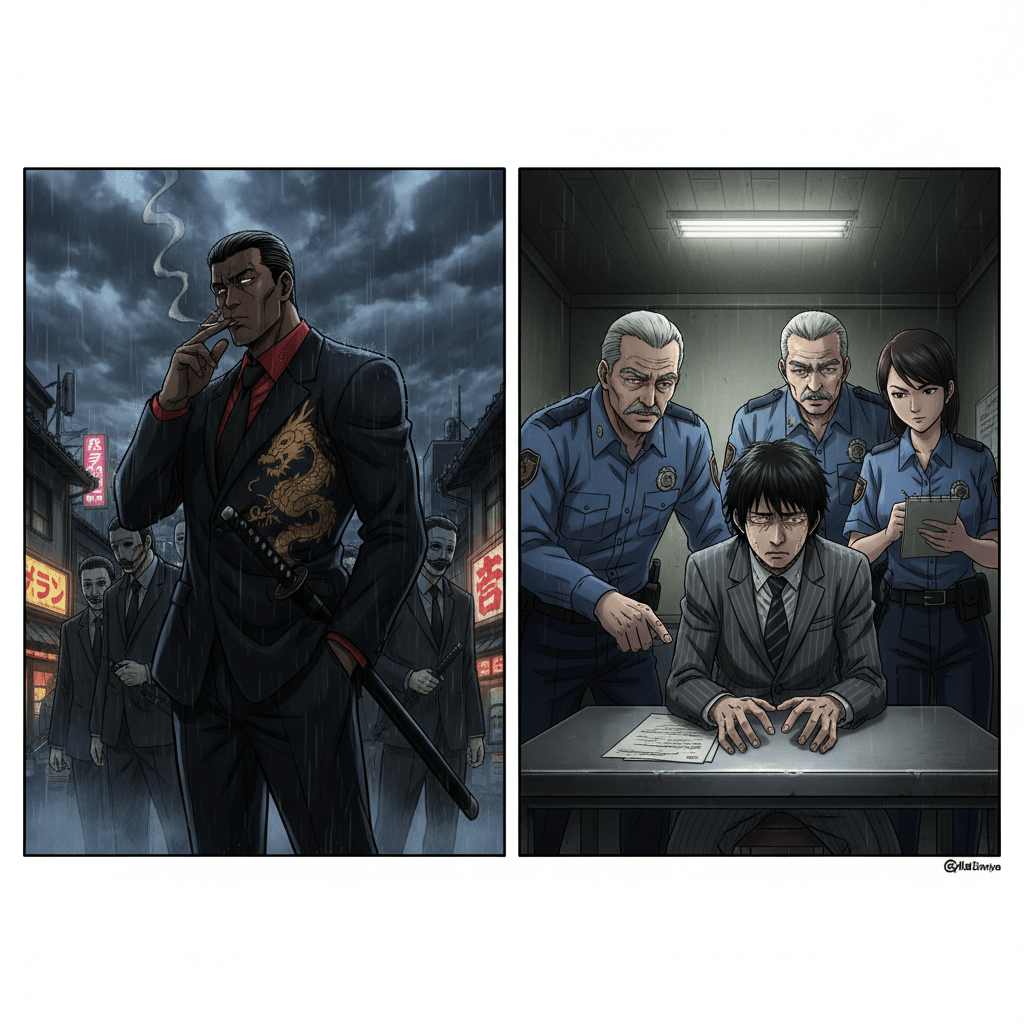
It’s not about facts. It’s not about what you know. It’s about what shit looks like on the surface. You’re sizing up the scene, straight up.
You use this all the time. Imagine your boy walks in after a brawl, his face all busted up. You’d say, 「痛そう!」 – “That looks painful!” You don’t know if it hurts, maybe he’s built different, but damn, it looks like it does.
Or you see the new guy in the crew, lookin’ all shaky before his first big job. You turn to your partner and say, 「あいつ、ビビってそうだ」 – “He looks scared.” It’s what you see right now.
Think of ~そう as the “vibe check” grammar.
When you roll up to a club, you check the vibe, right? You look at the bouncer. He’s got his arms crossed, mean-muggin’ everybody. You don’t know he’s a hard-ass, but he damn sure looks like one.

That bouncer is 「厳しそう」 – he looks strict. ~そう is that instant read you get just by lookin’. It’s the trailer, not the whole movie.

Read the table below then use it to conjugate some words you know.
Here’s the breakdown on how to build this thing.
| Type | How to Change | Example | Translation |
| I-Adjective | Drop the final い (i) | 忙しい -> 忙しそう | Looks busy |
| Na-Adjective | Drop the な (na) | 大変 -> 大変そう | Seems tough |
| Verb (V-Stem) | Use the masu-stem (drop ます) | 倒れます -> 倒れそう | Looks like they’ll fall |
| Exception: いい | new form | いい -> よさそう | Looks good |
| Exception: ない | new form | ない -> なさそう | Doesn’t seem to be |
It’s pretty simple. For I-adjectives, you just chop off that last “i” and slap ~そう on it. 辛い (karai – spicy/tough) becomes 辛そう. For Na-adjectives, just add ~そう to the root. 心配 (worry) becomes 心配そう. For verbs, you use that stem form, the one you use for ~ます. 始まる becomes 始まりそう – “looks like it’s gonna start.”
Pay attention to the exceptions, though. You can’t say 「いそう」 for “looks good.” That’s wack. You gotta use the OG form, 良い, and flip it to よさそう. And for the negative “doesn’t look like,” you take ない and make it なさそう. Like 「金なさそう」- “He looks broke.”

Listen to and repeat the sentences below.
そのカバン、めちゃくちゃ重そうだ。
That bag looks heavy as hell.
この強盗計画、面白そうだ。
This heist plan looks interesting (fun).
彼はそのネックレスを欲しそうだ。
He looks like he wants that necklace.
撃たれた仲間はもう死にそうだ。
Our buddy who got shot looks like he’s gonna die.
あのシャバ僧、金なさそうだ。
That civilian punk looks broke.
抗争がもうすぐ始まりそうだ。
It looks like the turf war is about to start.
このブツはよさそうだ。
This merchandise looks good.
ボスの新しいスーツ、高そうだ。
The boss’s new suit looks expensive.
刑務所の飯は、本当にまずそうだ。
Prison food looks real nasty.
このナイフ、めっちゃ切れそうだ。
This knife looks crazy sharp.
Stay solid.

Leave a comment