

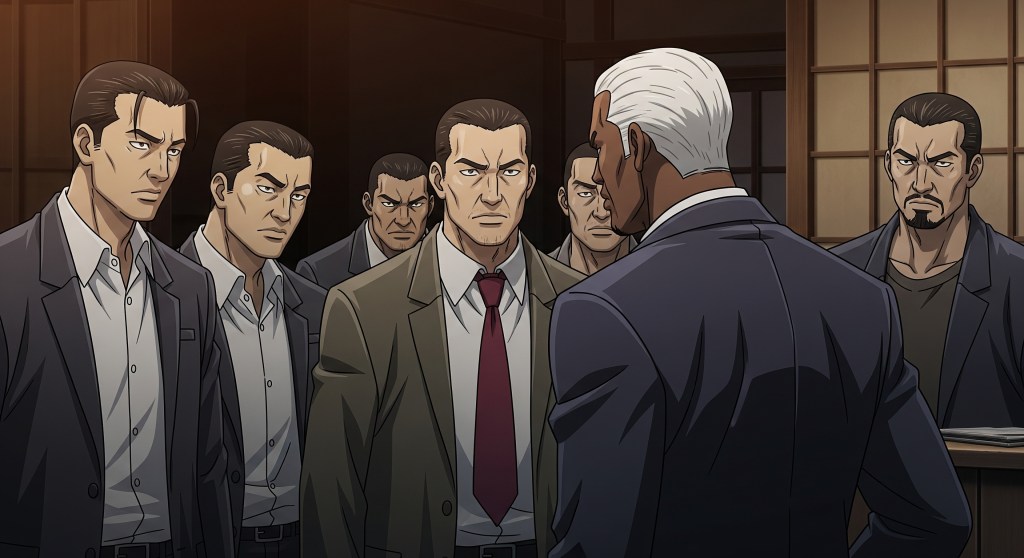
どうして おれ を しんじない?
doushite ore wo shinjinai?
Why don’t you believe me?

You got a few ways to ask “why?” in Japanese, but 「どうして」 is like when you’re a detective on the street, trying to figure out the motive. It’s polite enough for a regular conversation, but it’s also got that serious, direct vibe. It ain’t as soft as 「なんで」 which can be real casual and a little pushy sometimes. It’s not as formal as 「なぜ」, which you’d hear on the news or in a courtroom. Nah, 「どうして」 is for when you’re looking a cat dead in the eyes and saying, “Yo, tell me why you did that mess.” It’s real, and it’s got a little bit of that “I know you’re hiding something” flavor to it.

This is the real easy part, homie. どうして (doushite) ain’t no verb or adjective, so you don’t gotta trip about no crazy conjugations. It’s just a straight-up word. You just drop it in front of the thing you’re tryna question.
| English | Japanese |
| How come… / Why… | どうして |
See? Told ya it was easy. You just gotta learn the word and know when to use it. It’s a tool, ya dig? You don’t change a hammer to nail a board; you just use the hammer. Same with どうして (doushite). You put it in a sentence and it gets the job done, no fuss, no muss. It’s a fixed phrase, like “what’s up?” You don’t say “what’s uppin’?” You just say it as it is. It’s about bein’ efficient, not makin’ things more complicated than they gotta be.
Think of 「どうして」 like a wiretap. You ain’t just asking a simple question. You’re trying to get a deeper understanding of the situation, to find out the real story, the one they ain’t trying to tell you. You put that wiretap on the conversation, and you listen for the truth. It’s for when you’re trying to crack the case, not just get a quick answer.

Peep these words to level up your slang.
あいつ (Aitsu)
English: That guy; him.
When you talkin’ ’bout “aitsu,” you ain’t just sayin’ “that guy.” You sayin’ it with some attitude, you feel me? It’s like you talkin’ ’bout someone you got beef with, someone who crossed you, or just some cat you ain’t messin’ with. It’s got that edge, that vibe like you know he ain’t on the up-and-up. He’s that dude who’s been movin’ shady, and you callin’ him out without even sayin’ his name.
のがわ に ねがえる (No gawa ni negaeru)
English: To switch sides; defect; to turncoat.
This here is some serious business. When you “negeru” to the other side, you a snitch, a turncoat. You were with the crew, runnin’ with the squad, and then you flipped. You switched up and started playin’ for the other team. This is the ultimate betrayal, man. It’s like you were with Tupac, and then you went and started chillin’ with Biggie. You crossed the line, and there ain’t no comin’ back from that.
つうほうする (Tsuuhou suru)
English: To report to the authorities; to snitch.
This right here is the number one rule you don’t break. “Tsuuhou suru” means you told the Feds, you called the cops, you ran your mouth to the wrong people. You’re a rat, a tattletale. It ain’t about just talkin’ to some homie; it’s about goin’ straight to the law and droppin’ a dime on the whole operation. That’s a one-way ticket to bein’ blackballed for life.
こんな (Konna)
English: This kind of; such a.
Man, when you use “konna,” you’re showin’ your disgust. It’s like you seein’ somethin’ messed up, somethin’ you can’t believe. Like, “Konna yatsura?”—”These kinds of cats?” It ain’t just “this.” It’s “this” with a face of disbelief, a shake of the head. It’s used when you seein’ somethin’ so whack or so outta line that you gotta call it out.
つかいはたした (Tsukaihatashita)
English: Used up; depleted; exhausted.
When somethin’ is “tsukaihatashita,” it’s completely gone, done, finished. You ain’t got no more bread left? You “tsukaihatashita” all your money. You been hustlin’ all night, and you can’t go no more? You “tsukaihatashita” all your energy. It ain’t about bein’ a little tired; it’s about bein’ runnin’ on empty, with nothin’ left in the tank. It’s the end of the road.
Straight up, these sentences are all about that life.
どうして おれ から にげる んだ?
doushite ore kara nigeru n da?
Why are you running from me?
どうして そしき を うらぎった?
doushite soshiki o uragitta?
Why did you betray the organization?
どうして きのう の よる、でんわ に でなかった?
doushite kinou no yoru, denwa ni denakatta?
Why didn’t you answer my call last night?
どうして かね を ぜんぶ つかいはたした ん だ?
doushite kane o zenbu tsukaihatashita n da?
Why did you spend all the money?
どうして だれ も その けん に ついて はなさない?
doushite dare mo sono ken ni tsuite hanasanai?
Why is nobody talking about that matter?
どうして こんな きけん な けいかく を たてた?
doushite konna kiken na keikaku o tateta?
Why did you come up with such a dangerous plan?
どうして けんじゅう を かくしている ん だ?
doushite kenjuu o kakushiteiru n da?
Why are you hiding the gun?
どうして けいさつ に つうほうした ん だ?
doushite keisatsu ni tsuuhoushita n da?
Why did you snitch to the police?
どうして あの おとこ は いつも かね を ぬすむ ん だ?
doushite ano otoko wa itsumo kane o nusumu n da?
Why does that man always steal money?
どうして おれ を うらぎって、あいつ の がわ に ねがえった ん だ?
doushite ore o uragitte, aitsu no gawa ni negaetta n da?
Why did you betray me and flip to his side?
Alright, my people, that’s the real deal on 「どうして」. Now you know how to get to the bottom of things, no matter what. Keep your head on a swivel, and stay sharp out there. Peace.

Leave a comment