

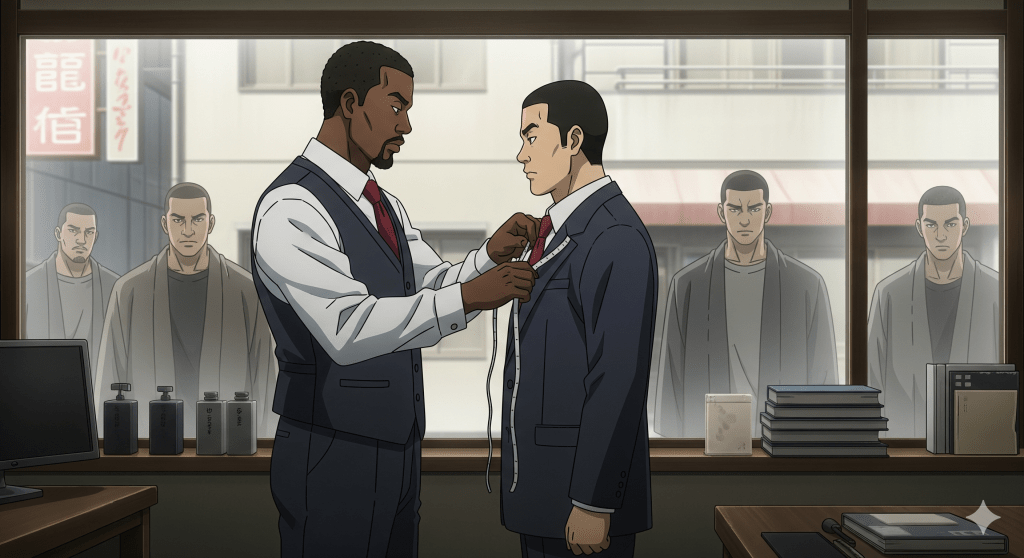
Situation:
An underground crew uses intricate clothing patterns to evade police and outsmart rival gangs.
西アフリカのある大都市で、オマールはストリートギャングのリーダーでした。彼の用心棒たちは、市場を支配し、店からお金を集めていました。オマールは怖い男として知られていました。
西アフリカ (nishi afurika): West Africa
大都市 (daitoshi): Big city/metropolis
用心棒 (youjinbou): Bodyguard
市場 (ichiba): Market
支配する (shihai suru): To control/to dominate
金を集める (kane o atsumeru): To collect money
怖い男 (kowai otoko): A scary man/a frightening man
知られる (shirareru): To be known
しかし、夜になると、オマールは小さなミシンでシャツを作りました。彼はとても上手な仕立て屋でした。彼は、自分が作ったカラフルなシャツを、町の貧しい子どもたちにプレゼントしていました。
夜になる (yoru ni naru): become night
上手な (jouzu na): Skilled/good at
仕立て屋 (shitateya): Tailor
自分 (jibun): Myself/oneself
町の貧しい子 (machi no mazushii ko): The poor children of the town
警察がパトロールに来る時、オマールのギャングはいつもすぐに逃げ道を見つけて、アジトに隠れることができました。警察は、どうして彼らがいつも自分たちの動きを知っているのか、不思議に思っていました。
警察 (keisatsu): Police
逃げ道 (nigemichi): Escape route
見つける (mitsukeru): To find
アジト (ajito): Hideout
隠れる (kakureru): To hide
自分たち (jibuntachi):): Themselves
動き (ugoki): Movement
知っている (shitteiru): To know
不思議 (fushigi): Strange/mysterious
ある日、ライバルのギャングがオマールの市場を襲撃しました。しかし、オマールの部下たちは、まるで地図を持っているかのように、完璧な連携で反撃し、敵を追い払いました。
ある日 (aru hi): One day
市場 (ichiba): Market
襲撃する (shuugeki suru): To attack/to raid
部下 (buka): Subordinate/underling
地図 (chizu): Map
完璧な連携 (kanpeki na renkei): Perfect coordination
反撃する (hangeki suru):): To counterattack
敵 (teki): Enemy
追い払う (oiharau): To drive away/to repel
その秘密は、オマールが作るシャツにありました。シャツの模様は、ただのデザインではありませんでした。それは、町の地図だったのです。色や形は、安全な場所、警察のルート、そして武器を隠した場所を示していました。町を歩き回る子供たちは、オマールの命令を運ぶ、生きた地図だったのです。
秘密 (himitsu): Secret
模様 (moyou): Pattern
町の地図 (machi no chizu): Town map
色 (iro): Color
形 (katachi): Shape
安全な場所 (anzen na basho): Safe place
武器 (buki):: Weapon
隠す (kakusu): To hide
場所 (basho): Location
示す (shimesu): To indicate/to show
歩き回る子供たち (arukimawaru kodomotachi): Children who wander around
命令を運ぶ (meirei o hakobu): To carry orders
生きた地図 (ikita chizu): Living map
Aight, so in this concrete jungle, Omar was the shot-caller, the top dog of his crew. His boys, they ran the marketplace, straight up jackin’ shops for their ends. Omar? Man, that dude was a straight-up G, had the whole neighborhood shook.
But when the sun went down, that’s when things got weird. Omar, he’d be on his little sewing machine, stitchin’ up some fresh threads. Dude was a straight-up tailor, no joke. And all them fly, colorful shirts he was makin’? He’d give ’em out to the little homies, the shorties on the block with nothin’.
Now, when the five-O came rollin’ through on patrol, Omar’s crew was like ghosts, man. They’d dip and be gone, tucked away in their hideout before the cops even knew what was up. The police? They was trippin’, couldn’t figure out how these cats were always one step ahead.
Then one day, some rival set tried to roll up on Omar’s turf, tryin’ to take over the market. But Omar’s crew? They shut that down, real quick. They moved like they had a map to the whole damn city, workin’ together perfect-like, and sent them bustas packin’.
Here’s the kicker, the real down-low. The secret was in the shirts Omar was makin’. Them patterns wasn’t just for lookin’ fresh. Nah, that was a map of the hood, fool. The colors, the shapes, they showed all the safe houses, the cop patrol routes, and where the strap was stashed. All them little kids runnin’ ’round town? They were walkin’, talkin’ maps, carryin’ Omar’s orders without sayin’ a word. Straight up gangsta.
Stay on that grind. Peace out.

Leave a Reply