

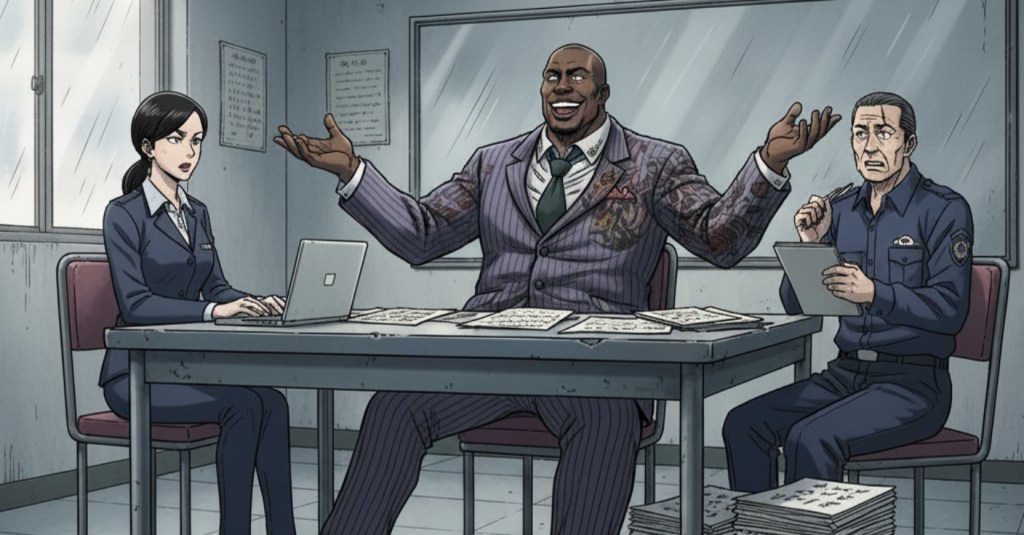
彼は口が堅いはずだったのに、全部話してしまった。
He was supposed to be tight-lipped, but he spilled everything.

This is for when you’re makin’ a call, layin’ down what’s what based on the facts on the street. It’s when you’ve got a strong reason to believe somethin’ is true. You ain’t just guessing; you’re deducing, like a true OG. It means somethin’ is supposed to be, should be, or is expected to be a certain way.
It’s about logical certainty. When you use はずだ, you’re puttin’ your reputation on the line, sayin’, “Based on what I know, this is how it’s gonna be.” It’s stronger than だろう (darou) or でしょう (deshou), which are more like straight-up guesses. With はずだ, you got evidence, you got intel. It’s the difference between thinkin’ it might rain and seein’ dark clouds rollin’ in like a rival crew. You know that storm is bound to hit.
Think of はずだ like you’re plannin’ the perfect score, the big heist. You got the blueprints to the bank, you timed the guards’ patrols, and your getaway driver is the best in the city. Every piece is in place.

So, you can say: 「計画は成功するはずだ。」 — “The plan is supposed to succeed.”
You’re not just hoping it works out. Based on all your prep, all the logic, success is the only expected outcome. If it fails, somethin’ unexpected must’ve happened—a rat in the crew or a surprise police raid. はずだ is that feeling of certainty before the action goes down, all based on solid reasoning.

Task: Try to conjugate some different verbs to practice the rule.
Here’s the 411 on how you hook this grammar up with your words.
| Word Type | How to Connect | Example | Translation |
| Verb (Plain) | Verb (Dictionary/Past/Negative) + はずだ | 彼は来るはずだ | He is supposed to come. |
| い-Adjective | い-Adjective + はずだ | このピザは美味しいはずだ | This pizza is supposed to be delicious. |
| な-Adjective | な-Adjective + な + はずだ | 彼は有名なはずだ | He is supposed to be famous. |
| Noun | Noun + の + はずだ | 今日は金曜日のはずだ | Today is supposed to be Friday. |
Breakin’ it down, it’s mad simple. For verbs, you just use the plain form—dictionary, past tense (た-form), or negative (ない-form)—and slap はずだ on the end. For い-adjectives, you just stick ’em together, no sweat. For な-adjectives, you gotta slide that な in between, like a secret password. And for nouns, you need that possessive の to connect the dots. Don’t forget, you can also get negative with はずがない for when somethin’ is impossible, or hit the past tense with はずだった for when things were supposed to be a certain way but went left.

Task: Try to shadow at least 5 sentences perfectly.
Peep these examples to see how the real Gs use it on a daily hustle.
ボスはもう事務所に着いたはずだ。
The boss should have arrived at the office by now.
証拠は全部消したから、捕まるはずがない。
I erased all the evidence, so there’s no way I’ll get caught.
ダイヤモンドはあのカバンの中に入っているはずだ。
The diamonds are supposed to be in that bag.
警察はこの隠れ家を知っているはずがない。
There’s no way the cops know about this hideout.
逃走用の車はガソリンが満タンのはずだ。
The getaway car should have a full tank of gas.
取引は今夜、港で行われるはずだった。
The deal was supposed to go down at the port tonight.
ライバルのボスは今日のパーティーに来ないはずだ。
The rival boss isn’t supposed to come to the party tonight.
あの金庫の暗証番号は簡単なはずだ。
That safe’s combination is supposed to be simple.
あの事件の目撃者はいないはずだった。
There wasn’t supposed to be a witness to that incident.
今月末には大金が手に入るはずだったのに!
We were supposed to get a huge sum of money at the end of this month!

Task: Try to guess what each word actually means.
Aight, here’s some fresh vocabulary you gonna need to roll with the big dogs.
事務所
[じむしょ] This is the spot where the crew handles all official business, you dig?
証拠
[しょうこ] This is the type of stuff that gets you locked up if the feds find it, so you never leave it behind.
消す
[けす] Sometimes, you gotta make a problem… or a person… disappear for good.
隠れ家
[かくれが] When the heat is on, this is the low-key spot where you lay low until things cool off.
逃走用
[とうそうよう] You always gotta have one of these ready for a quick getaway, no questions asked.
満タン
[まんたん] Before any mission, you make sure the ride is juiced up and ready to peel out at a moment’s notice.
取引
[とりひき] This is when two sides meet up to make a play and exchange the goods for the paper.
港
[みなと] Down by the water is where the big shipments come in and out, far from prying eyes.
暗証番号
[あんしょうばんごう] These are the secret digits that get you into the safe and unlock the bag.
目撃者
[もくげきしゃ] This is the person you hope didn’t see nothin’, ’cause you know what they say about snitches.
大金
[たいきん] This is that big score, the stack of bills that makes the whole risky operation worth it.
Answers
- 弱点 (jakuten) – weak point; weakness
- 事務所 (jimusho) – office; place of business
- 証拠 (shouko) – evidence; proof
- 消す (kesu) – to erase; to delete; to turn off; to eliminate
- 隠れ家 (kakurega) – hideout; hideaway; refuge
- 逃走用 (tousouyou) – for escape; for a getaway
- 満タン (mantan) – full tank (of gas)
- 取引 (torihiki) – transaction; deal; business
- 港 (minato) – harbor; port
- 暗証番号 (anshou bangou) – personal identification number (PIN); password
- 目撃者 (mokugekisha) – eyewitness
- 大金 (taikin) – large sum of money; fortune
Stay sharp. One love.

Leave a comment