

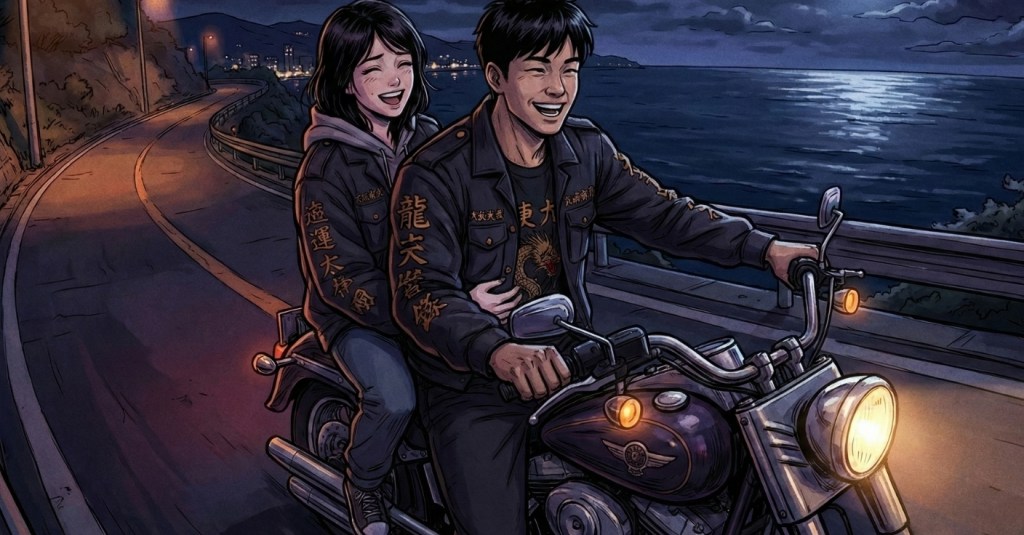
Situation:
Daiki and Yumi, two former “top” delinquents in their late 20s who are now trying to live “normal” adult lives. They struggle to leave the past behind and the fear that they’ve become “boring” adults.
かつて、この街で大輝と由美の名を知らない者はいなかった。大輝は「狂犬」と恐れられた暴走族のリーダーであり、由美はその隣で常に鋭い視線を飛ばしていた、最強のレディースだった。
しかし、十年の歳月が流れ、二人の生活は一変した。大輝は窮屈なスーツに身を包む会社員となり、由美は歯科助手として、毎日患者に愛想笑いを振りまいている。
かつて (かつて) – once; formerly; at one time
狂犬 (きょうけん) – mad dog
恐れられた (おそれられた) – was feared (passive form of osoreru)
暴走族 (ぼうそうぞく) – motorcycle gang; biker gang
鋭い (わるい) – sharp; keen; piercing
視線 (しせん) – look; gaze; line of sight
レディース – ladies; (specifically) a female biker gang or a female member of a biker gang
流れ (ながれ) – flow; stream; current
窮屈 (きゅうくつ) – tight; cramped; restrictive; formal
身を包む (みをつつむ) – to wrap oneself up; to dress oneself in
歯科助手 (しかじょしゅ) – dental assistant
患者 (かんじゃ) – patient
愛想笑い (あいそわらい) – forced smile; ingratiating smile
振りまいている (ふりまいている) – scattering; spreading (e.g., smiles or charm)
ある土曜日の夜、旧友の結婚式の二次会で二人は再会した。周囲が昔の武勇伝に花を咲かせる中、二人はどこか居心地が悪そうに隅の方でビールを飲んでいた。
「大輝、そのネクタイ、似合わなすぎて笑えるんだけど。」 由美が皮肉っぽく笑いながら話しかけた。 「うるせえよ。これでも部長に指摘されないように、毎日必死に締めてるんだ。由美こそ、そのお淑やかなワンピースはどうしたんだ?まるで別人じゃないか。」
二人は会場を抜け出し、夜の街を歩き始めた。かつて自分たちの「縄張り」だった場所は、今や巨大なショッピングモールや小綺麗なマンションに変貌を遂げていた。
旧友 (きゅうゆう) – old friend
結婚式 (けっこんしき) – wedding ceremony
二次会 (にじかい) – after-party
再会した (さいかいした) – reunited; met again
周囲 (しゅうい) – surroundings; people around one
昔の (むかしの) – old; former; from the past
武勇伝 (ぶゆうでん) – story of one’s military exploits; “war stories”
花を咲かせる中 (はなをさかせるなか) – in the middle of a lively discussion
居心地 (いごこち) – comfort; feel (of a place)
隅 (すみ) – corner; nook
皮肉っぽく (ひにくっぽく) – sarcastically; ironically
指摘されない (してきされない) – not pointed out; not identified
必死に (ひっしに) – desperately; frantically
締めてるん (しめてるん) – tightening; wearing (usually referring to a tie in this context)
淑やかな (しとやかな) – gentle; modest; ladylike; graceful
抜け出す (ぬけだす) – to slip out; to sneak away; to break free
縄張り (なわばり) – territory; turf
小綺麗な (こぎれいな) – neat; tidy; trim; pretty
変貌を遂げていた (へんぼうをとげていた) – had undergone a complete transformation
「なあ、由美。まだ持ってるか?例のやつ。」 大輝の言葉に、由美は黙って頷いた。二人は大輝の実家のガレージへと向かった。埃を被ったカバーを外すと、そこには十年前のままの真っ赤なバイクが眠っていた。
二人は実家の押し入れの奥から、色褪せた特攻服を取り出した。背中には派手な刺繍が施されている。今の自分たちが着るには、少しサイズが小さく、そして何より気恥ずかしいものだった。
「これ、今の私たちが着たら、ただの痛い大人だよね。」 由美は苦笑したが、大輝は真剣な表情でエンジンをかけた。
例のやつ (れいのやつ) – that thing (we talked about)
黙って頷いた (だまってうなずいた) – nodded silently
実家 (じっか) – one’s parents’ home; one’s family home
埃 (ほこり) – dust
被った (かぶった) – was covered in
眠っていた (ねむっていた) – was sleeping; was lying dormant
押し入れの奥から (おしいれのおくから) – from the back of the closet (Japanese-style sliding door closet)
色褪せた (いろあせた) – faded
特攻服 (とっこうふく) – “Tokko-fuku” (lit. “attack uniform,” the distinctive embroidered jumpsuits worn by biker gangs)
派手な (はでな) – flashy; gaudy; showy
刺繍が施されている (ししゅうがほどこされている) – is embroidered; has embroidery applied to it
痛い大人 (いたいおとな) – a “cringey” adult; an adult who is painfully embarrassing to look at
苦笑した (くしょうした) – forced a strained laugh
表情 (ひょうじょう) – facial expression
深夜の国道。響き渡るエンジン音は、社会の荒波に揉まれて消えかけていた二人の情熱を呼び覚ますようだった。 「たとえ周りからどう思われようと、俺たちの根っこは変わってねえんだよ!」 風を切って走る中、大輝が叫んだ。
彼らは海が見える丘に辿り着いた。かつては、ここで夜通し将来の夢や大人への不満を語り合ったものだ。今はもう、明日には仕事があり、守らなければならない規律がある。しかし、この一瞬だけは、何の肩書きもない「自分自身」に戻ることができた。
深夜の国道 (しんやのこくどう) – the national highway at midnight
響き渡る (ひびきわたる) – to echo; to resound; to reverberate
荒波に (あらなみに) – in the rough waves (often used metaphorically for the “harsh waves of society”)
揉まれて消えかけていた (もまれてきえかけていた) – was being tossed about and was starting to fade away
情熱 (じょうねつ) – passion; enthusiasm
呼び覚ます (よびさます) – to awaken; to rouse; to call forth
根っこ (ねっこ) – root; the core (of one’s personality or an issue)
風を切って走る中 (かぜをきってはしるなか) – while riding/running, cutting through the wind
辿り着いた (たどりついた) – finally reached; arrived at (after a struggle)
不満 (ふまん) – dissatisfaction; discontent; grievances
語り合った (かたりあった) – talked together; shared (stories/feelings) with one another
規律 (きりつ) – discipline; order; rules
肩書き (かたがき) – title; job title; social status; pedigree
朝日が昇り始め、空が紫からオレンジへと移り変わる。 「さて、帰るか。月曜日からはまた、普通の大人に戻らなきゃいけないしね。」 由美が特攻服を脱ぎながら言った。
「ああ。でも、たまにはこうして『補給』が必要だな。」 大輝は由美の目を見て、まっすぐに微笑んだ。二人は、かつての「リーダー」と「レディース」としてではなく、同じ時代を生き抜く「戦友」として、新しい連絡先を交換した。
昇り始め (のぼりはじめ) – rising; starting to rise
紫 (むらさき) – purple
移り変わる (うつりかわる) – to change; to shift; to transition
脱ぐ (ぬぐ) – to take off (clothing, shoes, etc.)
補給 (ほきゅう) – supply; replenishment; refueling
微笑んだ (ほほえんだ) – smiled
同じ時代 (おなじじだい) – the same era; the same period of time
戦友 (せんゆう) – comrade-in-arms; brother-in-arms
The Last Battle Jacket
Once upon a time, there wasn’t a soul in this town who didn’t know the names Daiki and Yumi. Daiki was the leader of a motorcycle gang, feared as the “Mad Dog,” and Yumi was the strongest sukeban (leader of a female gang), always at his side casting a sharp, intimidating glare.
However, ten years had passed, and the lives of the two had changed completely. Daiki became a salaryman wrapped in a cramped suit, and Yumi became a dental assistant, forcing polite smiles at patients every day.
On a Saturday night, the two reunited at a wedding after-party for an old friend. While those around them were in full bloom reminiscing about old “war stories,” the two sat in a corner drinking beer, looking somewhat uncomfortable.
“Daiki, that tie… it looks so bad on you it’s actually funny,” Yumi said, striking up a conversation with a sarcastic grin. “Shut up. I’m desperately tightening this thing every day just so my department manager doesn’t point out any flaws. And what about you, Yumi? What’s with that ladylike dress? You look like a completely different person.”
The two slipped out of the venue and began walking through the night streets. The places that were once their “turf” had now undergone a transformation into giant shopping malls and tidy apartment complexes.
“Hey, Yumi. Do you still have it? That thing?” At Daiki’s words, Yumi nodded silently. They headed to the garage of Daiki’s childhood home. When they pulled off the dusty cover, a bright red motorcycle from ten years ago lay there sleeping.
From the back of a closet in the house, they pulled out faded tokkou-fuku (battle jackets). Flashy embroidery was stitched across the backs. For the people they were now, the jackets were a bit small and, above all, embarrassing.
“If we wear these now, we’re just ‘cringe’ adults,” Yumi said with a strained laugh, but Daiki started the engine with a serious expression.
On the midnight national highway, the echoing roar of the engine seemed to awaken the passion that had been fading as they were buffeted by the rough waves of society. “Even if people think whatever they want about us, our roots haven’t changed!” Daiki shouted as they cut through the wind.
They reached a hill overlooking the sea. In the past, they used to spend all night here talking about their dreams for the future or their frustrations with adults. Now, they have work tomorrow and regulations they must protect. However, for this one moment, they were able to return to being “themselves,” without any titles.
The sun began to rise, and the sky shifted from purple to orange. “Well, time to head back. Starting Monday, we have to go back to being ordinary adults,” Yumi said, taking off her battle jacket.
“Yeah. But occasionally, we need a ‘refuel’ like this.” Daiki looked into Yumi’s eyes and gave her a straight, honest smile. The two exchanged contact information—not as a “leader” and a “gang member,” but as “comrades” surviving the same era.
Stay on that grind. Peace out.

Leave a comment